If you live in Ottawa , you probably already see what winter does to your vehicle. Months of road salt, freezing slush, and those never ending freeze-thaw cycles leave more than just the usual visible grime on your car— they also leave behind microscopic iron particles that are quietly messing up your paint. So yeah, iron remover spray has turned into one of those “ you really should have it” products in car care, and Ottawa drivers, honestly, can’t really afford to skip it.
At Magic Shield (magic-shield.ca), we’ve watched first hand how Ottawa winters treat vehicles in ways that are not always obvious to the naked eye. One of the biggest silent issues we deal with every single spring ? Iron contamination. And the fix is kind of simpler than most people assume— using a decent iron remover spray, at the right moment, can basically help protect your paint.
What Is iron remover spray and why Ottawa Drivers should pay attention?
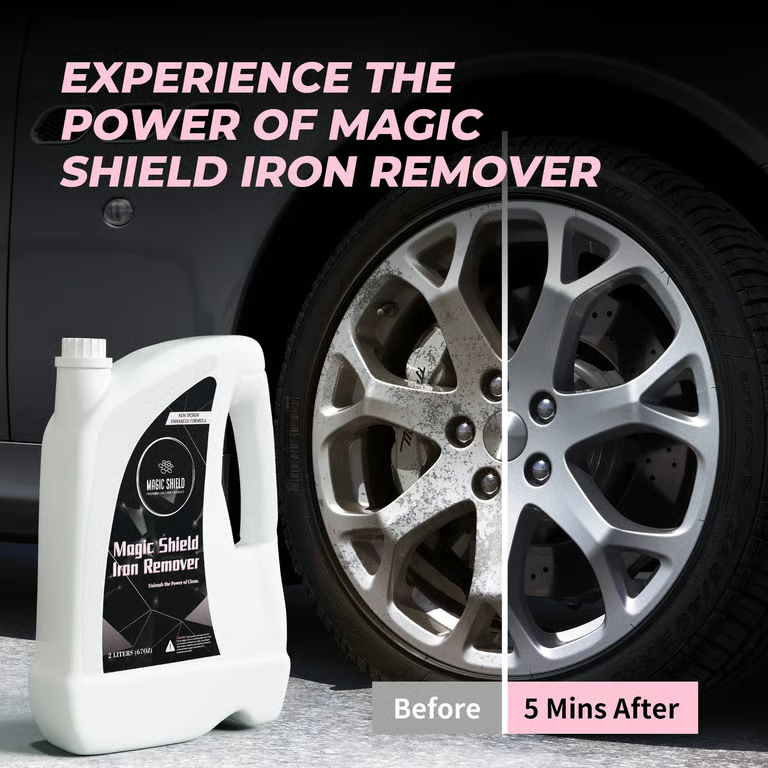
Iron contamination shows up when tiny metallic specks , like the kind shed from brake dust, railway lines , industrial fallout, and general road debris, find their way onto your vehicle and stick around in the paint, clear coat and wheel areas. At a microscopic level they’re not smooth either, they’re sharp and jagged, so they don’t just stay on the surface. They dig in.
In Ottawa’s climate this gets turned up a lot. Road salt and de-icing chemicals used heavily through the November to March stretch create an electrochemical situation that speeds up iron particle oxidation. Once those iron fragments start rusting inside your paint, they expand. That’s when you see tiny bubbles, orange speckling, and eventually deeper paint damage that no regular wash can properly undo.
Maybe you’ve noticed little reddish brown dots on a lighter colored car after winter. That isn’t just “dirt”, it’s oxidised iron contamination, and it needs an iron remover spray, not more soap.
How Iron Remover Spray Actually Works
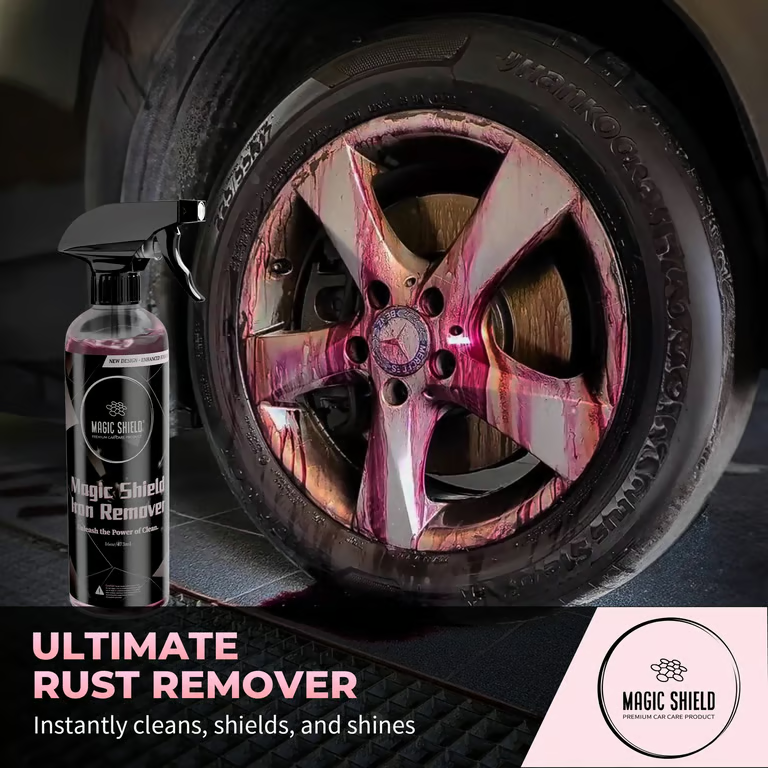
Iron remover spray does it more by chemical reaction ,not by rubbing at all. Usually it’s got active compounds—often ammonium thioglycolate ,or some similar chelating agent— that react with iron stuff rather than rough contact. So when you spray it on your vehicle surface ,these compounds grab onto the iron and chemically break it down. During that process the liquid often shifts to a deep purple or crimson tint, and yeah that color change is pretty much the tell, like a visual confirmation that it’s actually working.
Afterwards the dissolved iron particles are rinsed away easily, usually without any hard scrubbing. And this part matters, because trying to scrape it off yourself would do more than help: you can scratch the paint and essentially grind those iron bits deeper into the clear coat, which can make the whole situation far worse.
For Ottawa drivers who push their cars through months of harsh winter conditions, using an iron remover spray in the spring is, honestly, one of the most effective decontamination moves you can make before you apply wax, sealant, or even a ceramic coating. If you skip it you’re basically sealing in the contamination that is already quietly chewing at your paint.
When Should Ottawa Drivers Use Iron Remover Spray?
Timing really is the big deal here. In Ottawa, the best moment for iron remover spray is right after winter ends, typically March through May . That’s when the winter buildup is still fresh and hasn’t had much time to oxidise more under spring UV, sunlight, and general weather exposure.
Good times to use it include:
Spring decontamination wash always your first step, before polishing or applying any paint protection , yeah basically.
Before applying a ceramic coating or paint sealant , contamination under a coating defeats the whole point.
Before machine polishing , iron particles can clog polish pads and then you get micro-scratches you really do not want.
On wheels and brake areas, every 1–2 months — brake dust iron contamination builds up faster than anywhere else it seems.
And whenever you notice a rough texture when running a clay bar across your paint, thats the sign.
At Magic Shield (magic-shield.ca), we include an iron remover spray as a mandatory decontamination step in every full detail and paint protection service we provide. It is not optional, it is foundational.
Iron Remover Spray on Wheels A Game Changer for Ottawa Roads
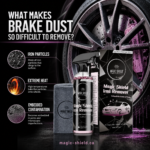
Ottawa stop-and-go traffic mixed with rough winter driving, plus constant braking on icy roads, leads to extreme brake dust buildup on your wheels. Brake dust is almost entirely iron particles — honestly, it is arguably the most concentrated source of iron contamination on any vehicle.
Using an iron remover spray on your wheels regularly changes the whole routine. Instead of scrubbing hard with harsh brushes that can mar alloy surfaces, you spray, wait for the chemical reaction to do the work, and rinse. The product does the heavy lifting, and your wheels end up cleaner than any brush-only approach.
For Ottawa drivers with premium alloys or painted wheels , this matters even more. If iron particles are left to oxidise on alloy surfaces, they can cause stubborn staining and pitting, and those repairs can get expensive fast, like costly to fix or refinish.
Why Magic Shield is Ottawa’s go to option for iron decontamination
Magic Shield (magic-shield.ca) was built, specifically for Canadian drivers in mind. Honestly we get it, detailing in Ottawa just isn’t the same thing as detailing in those warmer places. Our winters are tougher, the roads are saltier, and the whole damage buildup over one season can look kind of outrageous if you zoom in to the microscopic level.
Our iron remover spray formulation is made to work well in the temperature ranges Ottawa detailers actually work in, during spring and early fall. That can be as low as 5 to 10 degrees Celsius, which matters a lot. A lot of iron removers out there are tuned for warmer climates and then they kind of fall short when it gets cooler. For Canadian detailers that’s not just annoying, it’s a real problem.
And it’s not only iron remover spray, Magic Shield comes with a full set of paint protection products. Think from entry-level spray sealants to professional grade ceramic coatings, all through magic-shield.ca. These products are meant to play together as one system, so when you do the decontamination step with iron remover first, it basically prepares the surface for every following layer, helping you get better overall performance.
Step by Step, how to use iron remover spray the right way
Step 1 — Wash the vehicle first
Always begin with a thorough wash, to lift loose dirt salt residue and that top layer grime. Iron remover spray really needs direct contact with the paint or wheel surface, to do the job properly, not just “sit there”.
Step 2 — Apply on a cool surface in the shade
Never use iron remover spray on a hot surface, or under direct sun, because it dries too fast before the chemical reaction can finish. Spray generously and evenly across the panel or wheel you’re treating, and don’t rush it.
Step 3 — Wait and Watch the Reaction
Give the product 3 to 5 minutes to work. You will see it bleed purple or crimson as it reacts with iron particles. Do not rush this step — the reaction time is where all the actual work happens.
Step 4 — Agitate Lightly if Needed
For heavily contaminated surfaces, a light pass with a soft detailing brush during dwell time can help the product reach particles in tight areas. Do not scrub hard — the chemistry is doing the work.
Step 5 — Rinse Thoroughly
Rinse completely with a strong stream of water. Make sure no product residue remains in gaps, trimlines, or rubber seals.
Step 6 — Follow Up with Clay Bar
After iron removal, a clay bar pass picks up any remaining bonded contamination and leaves the surface genuinely smooth and ready for protection. At Magic Shield, we consider this the complete decontamination combo for Ottawa paint care.
FAQs:
Q1: Does iron remover spray actually work?
Yes, and the “proof” is basically right there. You spray it on your vehicle and it turns purple or red as it reacts with iron particles,so you can see it’s doing something, actively loosening the gunk. This kind of product works on paint,clear coat, and wheels too. The big thing is the dwell time, roughly 3–5 minutes, then rinse really well. Magic Shield (magic-shield.ca) makes their formulas for Canadian conditions, so they still behave in Ottawa’s cooler spring weather where a lot of generic stuff kind of gives up.
Q2: What happens if you leave iron remover on too long?
If the iron remover spray dries on the surface before you rinse it off, it can cause streaks or a leftover film that then needs re-washing to get rid of. On more sensitive areas,like bare metal or chrome, going past the suggested dwell time can make the finish feel kinda irritated. Best plan: work in the shade,keep the surface damp if you have to, and rinse within 5–7 minutes. Don’t let it dry all the way,ever.
Q3: Can I use iron remover spray on my car every week?
You can, but it’s usually overkill on painted panels. For paint, twice a year—spring and fall—is enough for most Ottawa drivers. Wheels are a different matter though. Brake dust and iron contamination accumulate way faster,so using iron remover spray on wheels every 2–4 weeks during heavy driving seasons is pretty normal and, honestly, beneficial.
Q4: Is iron remover the same as a clay bar?
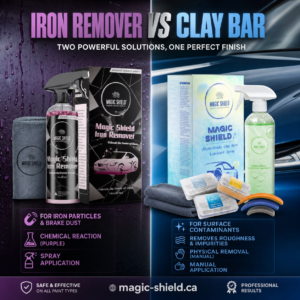
No, not even close, they’re doing separate tasks. Iron remover spray is a chemical solution that breaks down iron particles bonded to your paint. A clay bar is more of a physical approach, it lifts contamination through gentle abrasion. The usual order is iron remover first, then clay bar after. If you use clay bar without iron remover first,you’re mostly just rubbing around iron grit, which isn’t the whole point.