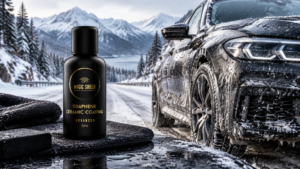
Quick answer: yes, you can apply a ceramic or graphene coating during a Canadian winter, but only indoors. Every Magic Shield coating label calls for a surface temperature of 15°C to 24°C (59°F to 75°F) in a shaded, dust-free space. In practice that means a heated garage or a heated rental bay, a car that has been brought inside long enough for the panels to warm up and dry, and keeping the car indoors for the cure time on your product label. If you have no heated space, wash and protect the car with a spray topper in a warm spell, or wait for spring to do a full coating.
Why cold weather matters for ceramic coatings
A ceramic or graphene coating is a liquid that has to spread, flash (the solvent evaporates) and then bond to the clear coat. Cold panels slow the flash, make the product harder to level and leave more high spots. Cold metal also pulls moisture out of the air, so a panel that looks dry can carry a thin film of condensation that stops the coating bonding properly. That is why the panel temperature matters more than the air temperature in the garage.
Salt is the other winter problem. Coating over salt residue, iron fallout or old wax traps it under the layer you are trying to protect, so winter prep has to be thorough.
Temperature and cure times on Magic Shield labels
These figures come from the instructions for each product. Always follow the label that came with your bottle.
| Product | Surface temperature | Cure before outdoor use |
|---|---|---|
| Graphene Ceramic Spray Coating | 15°C–24°C (59°F–75°F) | Keep dry 4 hours indoors, or 24 hours if exposed outdoors |
| Graphene Ceramic Coating (50 mL) | 15°C–24°C (59°F–75°F), cool panel, no direct sun | Keep indoors 8–12 hours; avoid moisture for 24 hours |
| Ceramic Coating PRO 10H | 15°C–24°C (59°F–75°F) | Keep indoors at least 8 hours |
| Diamond AI Coating | 15°C–24°C (59°F–75°F) | Cure 2 hours in a garage; avoid water for 7 days in winter |
How to ceramic coat your car in winter: step by step
- Find a heated, enclosed space. A home garage you can heat, or a heated self-serve or rental detailing bay. Outdoors in winter is not suitable for any of the products above.
- Bring the car in early. Give the panels time to warm up and any snow, slush or meltwater to drain and evaporate. Check the paint itself, not just the room, with an inexpensive infrared thermometer: you want 15°C–24°C on the panel.
- Heat safely. Coatings and prep products give off solvent vapour. Use an electric heater, keep it away from the car and products, keep the space ventilated, and never use open-flame or unvented fuel heaters while you work.
- Wash off the salt. Use a pH-neutral shampoo such as Graphene Shampoo, paying attention to lower doors, sills and wheel arches where salt builds up. Dry the car completely, including gaps and mirrors.
- Decontaminate. Spray Iron Remover to dissolve embedded iron and brake dust, rinse, then use a Clay Bar Kit on the paint until it feels smooth.
- Strip oils. Wipe each panel with Prep Spray so the coating bonds to bare clear coat, not wax or polish residue.
- Apply one panel at a time. Follow the flash time on the label. Cooler panels need longer: the PRO 10H label, for example, gives about 5 minutes at 15°C and about 3 minutes at 20°C–25°C before levelling. Check each panel for high spots under good light.
- Let it cure indoors. Keep the car inside for at least the cure time in the table above, and keep it away from snow, rain and washing for as long as the label says.
No heated garage? Your winter options
- Use a spray topper on a mild day. The Graphene Ceramic Spray Coating has the shortest cure (4 hours dry indoors), but it still needs a 15°C–24°C surface, so it is best applied indoors or on a warm day in late autumn or early spring.
- Book a heated bay. Some self-serve car washes and DIY garages rent heated bays by the hour, which is enough for a spray coating and often for a bottle coating if you can leave the car inside to cure.
- Maintain now, coat in spring. Keep salt off the car with regular pH-neutral washes through winter (see our guide to protecting your paint from road salt) and plan a full coating with one of our ceramic coating kits when temperatures are consistently above 15°C.
Looking after a coated car in winter
- Rinse salt off regularly, especially the lower panels and underbody, rather than waiting for a warm day to do a full wash.
- Use a pH-neutral shampoo for hand washes. Strong alkaline pre-soaks used at some automatic washes can wear protection faster (see our pH-neutral car shampoo guide).
- Top up the finish with the Graphene Ceramic Spray Coating when water stops beading as well as it did. Our maintenance kits group the products you need.
- Don’t brush or scrape snow hard across coated paint; use a soft snow brush and clear the car before it freezes on.
Frequently asked questions
Can I apply ceramic coating below 10°C?
Not with Magic Shield coatings. Every product label asks for a surface temperature of 15°C to 24°C (59°F to 75°F). Below that the coating flashes slowly, levels poorly and may not bond properly.
Can I apply a spray coating outside in winter?
It is not recommended. Even spray coatings need a 15°C–24°C surface and a dry car. Outdoors in a Canadian winter, the panel will usually be too cold and may carry condensation or salt residue.
What happens if snow or rain hits a fresh coating?
Water on a coating that has not finished its initial cure can leave spots or marks and can weaken the finish. Keep the car indoors and dry for the time on the label. If water does touch the coating early, dry it gently with a clean microfiber towel.
Is graphene or ceramic coating better for winter?
Both make salt and grime easier to wash off, and neither one stops salt from building up, so regular rinsing still matters. The choice depends more on how much prep and application time you have than on winter alone. Our guide on how to choose a DIY ceramic coating kit compares the options, and the Magic Shield vs GYEON vs CarPro comparison covers how Magic Shield compares with other brands.