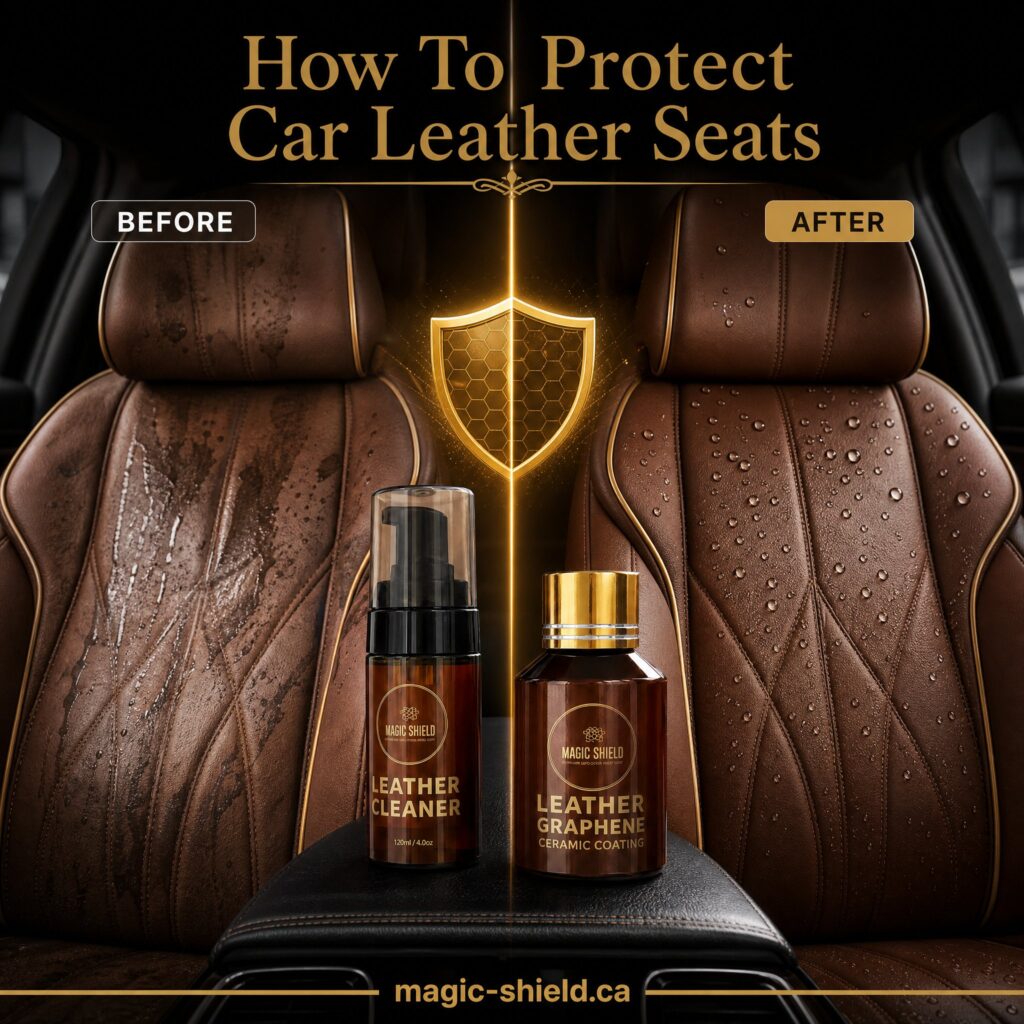
Knowing how to protect car leather seats is the first step to keeping them looking new for years. Leather seats provide comfort, elegance, style, and luxury to the vehicle. At the same time, frequent use may impact the leather’s appearance. Sunlight, skin oils, dirt, spills, scrapes, and dye transfer from clothing can all make the leather look old, dirty, or damaged.
For Canadian drivers, seasonal changes bring about new problems. Summer sun heats the car’s interior, while cold weather clothing, road salt, and general dampness increase the difficulty of maintaining the inside of the vehicle.
How to protect car leather seats and keep them looking good for longer?
Combining regular cleaning with the right leather care products and a leather seat protection coating made for car interiors is the most reliable way to keep leather looking good. In this article, you will learn how a leather protection coating works, what you should do to prepare your seats, how to apply the coating properly, and how to look after the leather finish.
Why Do Leather Car Seats Need Protection?
Knowing how to protect car leather seats starts with understanding what damages them in the first place. Although leather is tough, it is not fully immune to wear and tear from daily use. With inadequate maintenance, the surface may slowly start to fade and lose its natural feel.
Given below are some of the common things that affect leather car seats:
1. Sunlight and UV Exposure
If a vehicle is exposed to long-lasting sunlight, the interior will receive ultraviolet radiation and heat. This may lead to the deterioration of the leather’s condition over time.
To avoid unnecessary damage, it is advisable to park the vehicle in a garage or in a shaded area and use appropriate protection for the interior.
2. Dirt, Body Oils, and Everyday Contact
Whenever a user enters or exits a car, small amounts of soil, sweat, and natural oils usually move to the car seat.
Over time, these impurities tend to accumulate, especially in the driver’s seat and other well-used areas.
3. Clothing Dye Transfer
There is a chance of dark denim and some other fabrics transferring colour onto light-coloured leather seats. Usually, these marks are more visible on beige, cream and white interiors.
Taking note of regular cleaning and using a suitable leather protection product can ease the day-to-day maintenance.
4. Friction and Daily Wear
Frequent interactions with the vehicle during entering and exiting can wear down the most-used areas of the seats over time. The driver’s seat is usually subject to more wear than the back seats of the vehicle.
A good leather coating can reduce the effects of day-to-day wear, but it cannot prevent all wear and tear.
5. Spills and Stains
Spills from beverages and food can leave stains unless they are cleaned right away. Depending on the type of leather and how it was treated, certain materials may be absorbed or marked by spills.
Gently blot the spilled liquid and treat the spill with a product designed for automotive leather. See wikiHow’s guide to cleaning leather car seats.
What Is a Leather Seat Protection Coating?
If you are learning how to protect car leather seats, the first thing to understand is what a coating actually is. A leather seat protection coating is a thin protective layer applied to clean leather car seats.
A coating is different from a leather cleaner, which only cleans the leather surface, and from a leather conditioner, which helps maintain the leather’s feel. A coating is a protection step applied after the leather has been cleaned and prepared.
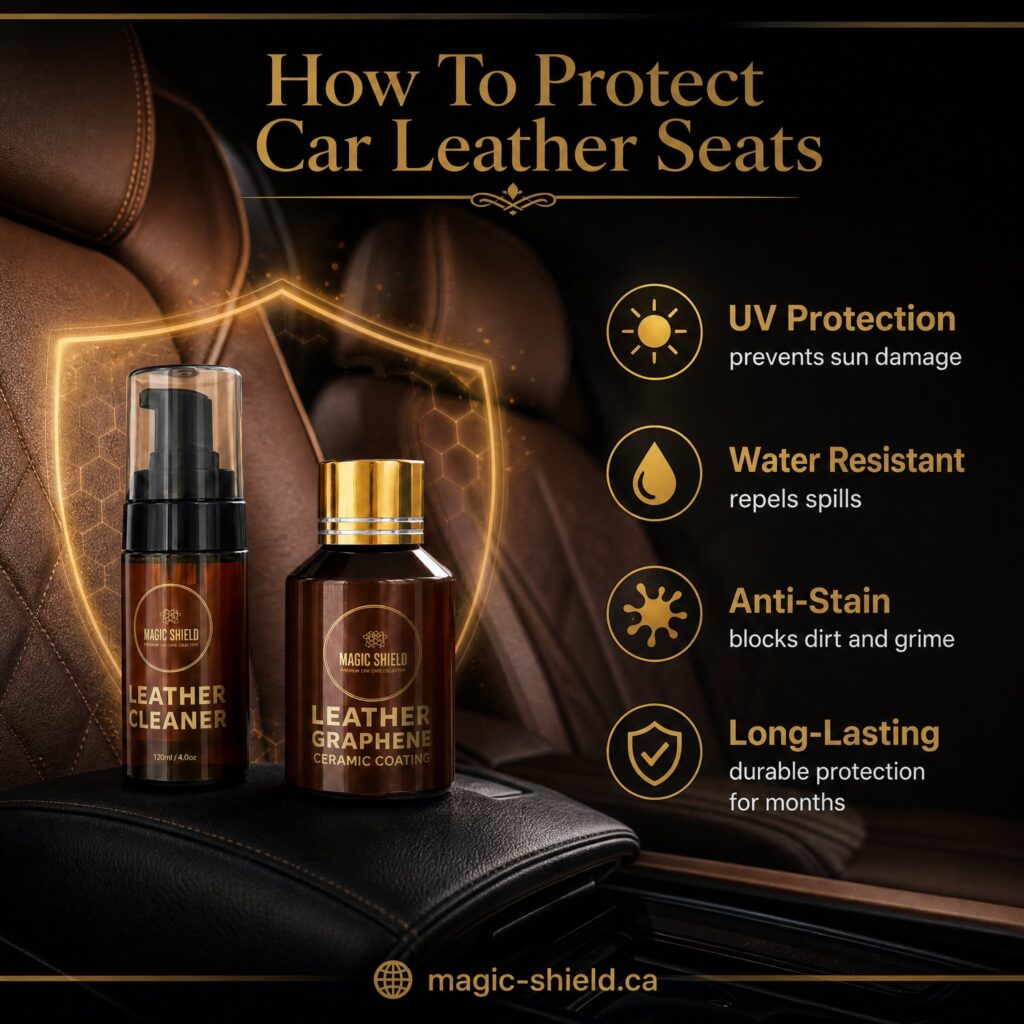
Leather coatings vary, but they generally provide certain benefits such as:
- Protection from dirt.
- Protection from spills and stains.
- Protection from some environmental conditions.
- Easing the regular maintenance of the leather.
- Preservation of the original leather appearance.
However, a leather coating is not meant to repair torn, heavily scratched, or damaged leather. Make sure the product is compatible with your type of leather before use.
Leather Coating vs Leather Conditioner: What’s the Difference?
These products serve different purposes, so choosing between them depends on what your seats need.
| Feature | Leather Conditioner | Leather Protection Coating |
|---|---|---|
| Main purpose | Helps maintain leather feel | Adds a protective surface layer |
| Cleaning | Usually not a replacement for cleaning | Requires a clean surface first |
| Protection | Depends on formulation | Designed for surface protection |
| Application | Routine leather care | Applied as a dedicated protection step |
| Maintenance | May require regular reapplication | Follow the coating’s stated lifespan |
It is important to note that not all conditioners and coatings will act in the same way. Some leather cleaning kits will provide all the needed products in one package, whereas others will sell different products separately.
To achieve the best results, make sure you follow the instructions for the specific product rather than mixing together different treatments that may not be suitable for each other.
How to Protect Car Leather Seats: Step-by-Step
Applying a leather protection coating is not complicated, but preparation is important. Dirt, oils, and moisture can interfere with an even application.
Follow these steps to learn how to protect car leather seats before using any leather coating.
Step 1: Vacuum the Interior
Be sure to remove any crumbs, loose dirt, and dust from the car seats first. Now take out the vacuum cleaner with the appropriate upholstery attachment. Pay close attention to the stitching, any gaps between the seats, and the edges of the seats.
Step 2: Clean the Leather Seats Properly
Use a good leather-friendly cleaner (see our tips on choosing a leather cleaner). Make sure you use that cleaner in accordance with its guidelines and clean only a small area at a time, using a microfiber cloth or a special leather brush, without any vigorous scrubbing. Then use a towel to remove all the cleaning solution and the dirt from the surface. For a full walkthrough, read our guide on how to clean leather car seats.
Step 3: Allow the Surface to Dry Completely
Coating cannot be applied to drenched, moist leather seats. Post-cleaning, allow the leather to dry. Then, check it to verify the absence of moisture, cleaner residue, or dirt. While applying the coating, ensure that the surface is dry and clean.
Step 4: Prepare the Coating and Test a Small Area
Before using a coating, read the product instructions. Make sure the coating is suitable for your leather and conduct a test on an inconspicuous area to ensure the required look before covering the seat. Do not use exterior car paint coating to coat the leather interior.
Step 5: Apply the Leather Protection Coating
Use the applicator supplied with the product, if available. Work in small sections, follow a set order, and avoid using too much product. Pay special attention to heavily used areas, including:
- The driver’s seat edges
- Front seat cushions
- The backs of the seats
- The rear passenger seats
- The leather armrests
Do not coat any surface the product instructions say to avoid. For product-specific tips, see our product how-to guides.
Step 6: Allow the Coating to Set and Buff as Directed
It is important to note that certain coatings have a few minutes of wait time before wiping off all excess product. Use a microfiber towel that is dry and clean to polish the surface according to the manufacturer’s instructions. Check that there are no inconsistent patches, residues, or excessive product.
Step 7: Allow Proper Curing Time
Curing is an important part of the application process. Leave the newly treated surface undisturbed for as long as the manufacturer instructs. For Magic Shield Leather Graphene Ceramic Coating, the product page recommends letting the coating bond for several hours before the seats are used.
How Magic Shield Leather Graphene Ceramic Coating Helps Protect Car Seats
For anyone learning how to protect car leather seats with a specialized product, Magic Shield Leather Graphene Ceramic Coating has been formulated specifically for leather surfaces.
The formulation is based on graphene and ceramics to protect leather from dirt, moisture, UV rays, and wear while keeping the surface looking natural.
The kit includes:
- 100 ml of leather cleaner
- 30 ml of leather graphene ceramic coating
- Applicator and microfiber cloths
- Instructions for application
The recommended process is simple:
- Clean the leather with the leather cleaner included in the kit.
- Apply the coating evenly with the applicator.
- Let the coating dry, then buff it with a clean microfiber cloth.
Magic Shield claims that the coating is effective for up to 5 years after proper application and use. Actual results depend on leather condition, application, and maintenance.
How to Maintain Leather Seats After Applying a Coating
Learning how to protect car leather seats does not end when the coating cures. Applying a coating is only one part of interior care. Regular maintenance helps keep your seats looking clean and helps preserve the protective finish. For more seasonal tips, see our guide to leather car seat care in Canada.
Here are some practical habits to follow:
Clean Small Spills Promptly
Gently blot the surface using a fresh microfiber cloth. Rubbing hard can spread the stain.
Remove Dust and Dirt Regularly
Use clean, soft microfiber cloths to wipe the car seats. Use only leather-compatible cleaning products.
Avoid Harsh Cleaning Chemicals
Cleaning products like common soaps, solvents, and scrubbing brushes can harm leather and its protective coating. Always go for products designed for automotive leather.
Protect the Interior from Excessive Sunlight
Park in the shade or in a garage whenever possible. Windshield sunshades can also be used to help reduce heating of the interior.
Follow the Coating’s Maintenance Instructions
Coatings differ as far as maintenance requirements are concerned. Avoid using conditioners, oils, or other protectants on top of the coating unless the manufacturer says they are compatible.
Protecting Leather Seats in Canadian Winters
Knowing how to protect car leather seats in winter starts before the first snowfall. Winter is hard on car interiors in Canada. Road salt and slush come in on boots and clothing, wet jackets sit on the seats, and the cabin swings between cold and heated-seat warmth. A few habits help:
- Wipe off salt marks and slush as soon as you can with a damp microfiber cloth and a leather-safe cleaner. Salt residue that is left to dry is harder to remove.
- Avoid sitting on the seats in a soaking wet jacket, or put a towel down on wet days.
- Apply a coating only to clean, dry leather. Turn off the heated seats and let the leather cool first, because coatings should not be applied to hot surfaces.
- Apply the coating in a garage or other sheltered space rather than outside in freezing or wet weather, and follow the product instructions.
Applying a leather seat protection coating before winter starts gives the seats a protective layer, so salt and slush are easier to wipe away.
Common Mistakes to Avoid When Protecting Leather Car Seats
Many drivers learning how to protect car leather seats skip the preparation step. Even quality leather coatings will fail if the surface is not prepared or treated properly. Common mistakes include:
- Applying coating on dirty or wet leather
- Using exterior ceramic paint on inner seats
- Using excess product on one spot
- Not testing a small area for compatibility before applying coating
- Using rough brushes or abrasive cleaning materials
- Sitting on treated seats during the curing period
- Believing that coating can fix deep scratches, cuts, or damaged leather
- Applying the product on suede or nubuck without checking compatibility
Best Leather Car Seat Care Routine for Canadians
Winter Care Routine
Clean every month
Condition every 4 weeks
Protect each time cleaning is done
Immediately remove salt stains
Summer Care Routine
Clean every 6–8 weeks
Condition every 2–3 months
Always use UV protectant
Fall & Spring
Seasonal changes require deep cleaning
Look for cracks before winter
Final Thoughts
In short, learning how to protect car leather seats takes just a few careful habits. Protecting leather car seats comes down to a simple routine: vacuum, clean, let the leather dry, test a small area, apply the coating evenly, and give it time to cure. After that, regular gentle cleaning keeps the seats looking good through summer sun and Canadian winters.
If you want a leather seat protection coating made for car interiors, take a look at Magic Shield Leather Graphene Ceramic Coating, which includes a leather cleaner for the prep step.
Frequently Asked Questions
How to protect car leather seats?
The best approach is to clean the seats with a leather cleaner, let the leather dry completely, and then apply a suitable leather protection product. Regular cleaning and wiping up spills quickly help keep the seats looking good.
Does leather seat protection coating prevent cracking?
The right leather protective coating may work to prevent environmental impacts and wear from contributing to damage. It should be noted, however, that it does not promise to forever prevent cracking or repair existing deterioration.
Can I apply ceramic coating to leather car seats?
Yes, only if it is a special product designed for leather. Regular automotive paint coatings cannot always be applied to leather. Identify the compatibility requirements from the manufacturer.
How long does leather protection coating last?
The duration of leather protection varies according to the formulation of the coating, condition of leather, application method, and care procedures. Some coatings may keep leather protected for a couple of years, while Magic Shield Leather Graphene Ceramic Coating claims to be effective for up to five years, if the application steps are followed.
Should I clean leather seats before applying a coating?
Yes, the cleaning process is very important, as oils, dirt, and residues may prevent proper application. Seats should also be dried completely before applying the coating.
Can leather protection coating be used on beige or white seats?
Yes, if the manufacturer says it is safe for light-coloured leather. Test a small hidden spot first.
Can I use leather protection coating on a steering wheel?
Specific leather-protecting agents can be used on a compatible leather steering wheel. Nevertheless, one should note that the steering wheel is a surface frequently touched and thus must be checked with the producer’s instructions to ensure that the treated surface is not slippery.
Is leather conditioner better than leather coating?
The two cannot be compared since they serve totally different functions. The conditioner maintains the finish, while a leather protector works as a preventive layer. The choice should be based on leather condition and usage of the product.