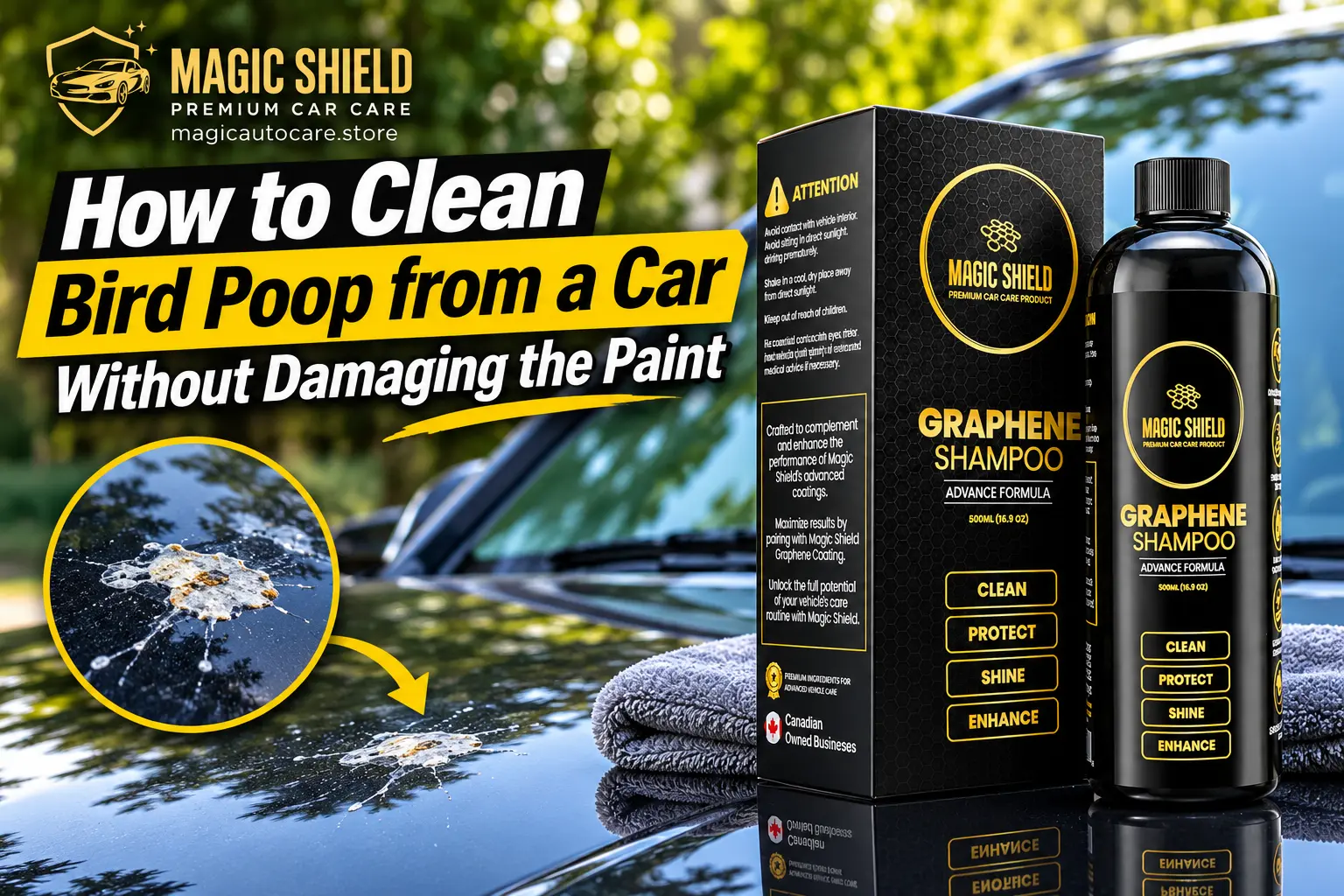
Even if bird droppings may not seem dangerous, their presence on your automobile’s paintwork can actually cause discoloration, dullness, and sometimes irreparable surface damage. This issue is made worse by direct sunlight and high temperatures, How to Clean Bird Poop from a Car Without Damaging the Paint which speed up the hardening.
The good news is that most of the time you can clean bird droppings off your automobile using the correct approach, proper cleaning agent, and some patience. The most important thing is to soften the residue first and then remove it instead of scraping it dry and stiff.
In this guide, you will find out how to remove bird droppings from your automobile without hurting its paint, what errors to avoid, and how to take care of your car regularly.
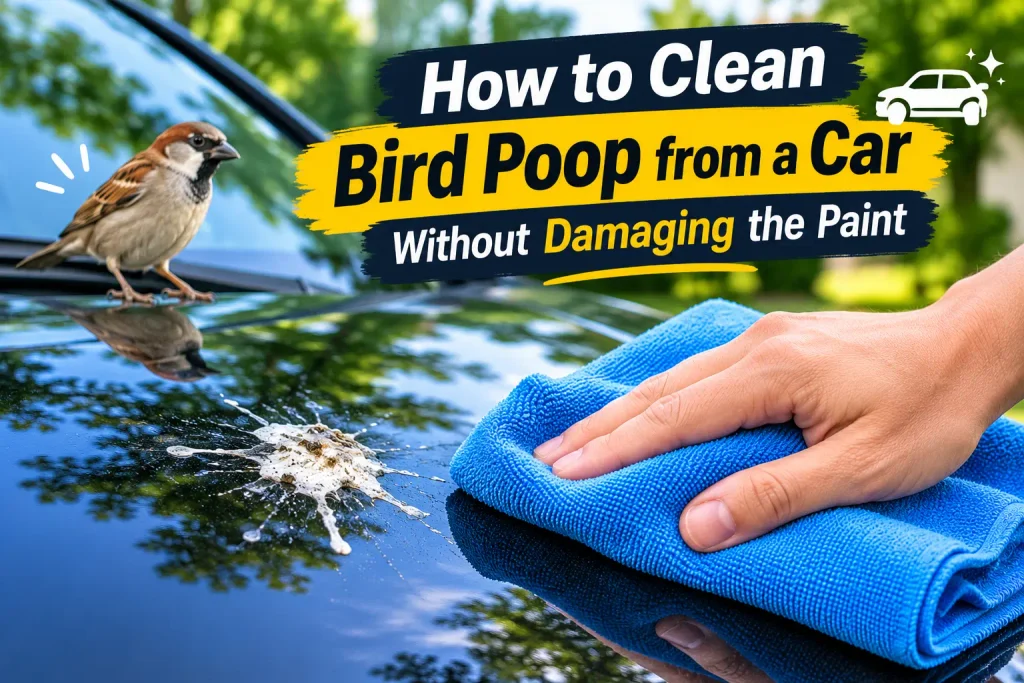
Why Is Bird Poop Bad for Car Paint?
Excrement from birds carries waste materials and can contain tiny abrasives that lead to scratches on paint when rubbed on any surface. When the droppings stay on the paint, heat and sunlight may lead to some staining or etching of the clear coat.
The danger depends on a number of factors, such as the time the droppings are on the vehicle, the weather conditions, paint condition, and whether the droppings are removed properly.
Important: Bird droppings should be removed as early as it is safe to do so, as waiting for the next cleaning of the car may make it harder to clean the mark.
How to Clean Bird Poop from a Car: Step-by-Step
1. Park in a Shaded Area
If you can, park somewhere that doesn’t get direct sun. When the paint gets hot, moisture can evaporate quickly, making it harder to remove dried bird poop. Make sure to cool off the surface before starting the cleaning process. Never apply the cleaner on a hot surface, unless otherwise stated in the product instructions.
2. Soften the Bird Droppings First
Never scrape bird poop that has dried with your fingernail or anything tough. Such actions can lead to dragging debris across the surface and damaging the clear coat. Instead, soak a microfiber towel in water and place it gently on the part with residue. That way, it will become easier to remove after some time. If the towel dries off, add more water to it.
3. Lift the Residue Gently
After the droppings have softened a bit, remove them carefully using a clean, moist microfiber towel; while doing that, you have to move gently and avoid pressing too hard against the paint. Should there still be residue left after the previous step, repeat the soaking treatment process. There is no need to rub the same area using a dirty towel because particles might scratch the surface.
4. Wash the Area with Car Shampoo
Once the large mark has been eliminated, one should wash the area with pH-neutral car shampoo, which is appropriate for paint finishes. Small amounts of the car shampoo should be mixed with water as per the directions printed on the product label; it is advisable to use a clean wash mitt or microfiber cloth. Make sure to rinse the area properly so that no shampoo or dirt remains. If you are cleaning many areas, make sure to replace the used wash water with clean water so that debris is not transferred from one area to another. It is advisable to use proper car shampoo for car detailing instead of dishwashing liquid, as it can potentially remove protective wax or leave the paint without the necessary protection.
5. Dry the Surface Carefully
Use clean, soft microfiber towels to dry the area. One must only pat or smooth the wet area without applying pressure. After the area is dried up, it is necessary to look at it well lit. If the mark is still there, it is not recommended to apply force or use abrasive polish.
6. Check for Staining or Paint Etching
The bird droppings may sometimes wash away, but a dull stain might remain. This happens when the top coat has been damaged due to heat and stains.
Simply washing the car may not eliminate the etching that is produced; depending on the severity, it will need the application of a safe-for-the-paint product or professional detailing. Always check out the product in a less visible area.
If the etching is serious, or the paint suffered damage, or you are not sure how to treat it, it is best to consult a detailer before polishing the paint.
What Should You Avoid When Removing Bird Poop?
A few common cleaning errors will convert a small mess into a paint issue.
Never wipe dried droppings off in their dry form. Softening them first will lower the chance of the surface being scratched.
When cleaning, do not scrape the surface. Keys, fingernails, plastic cards, or any hard tools might damage the finish.
Do not use abrasive paper towels or dirty cloths. They might drag particles on the paint.
Avoid using strong household cleaning products. Use products made for automotive surfaces.
Do not polish immediately. Clean the surface first and check if any marks remain.
Do not leave bird dung for several days. It is best to clean it immediately.
Can Ceramic Coating Prevent Bird Poop Damage?
Ceramic coatings can simplify vehicle cleaning by introducing a protective layer that facilitates the release of grime and water. However, it does not make paint resistant to bird droppings all the same.
Bird droppings are still detrimental to the coating and to the paint itself, depending on a number of factors such as temperature, time of exposure, quality of the coating, and the type of contamination involved.
When dealing with a ceramic finish, use only products designed for use with such a finish and comply with the instructions given by the manufacturer.
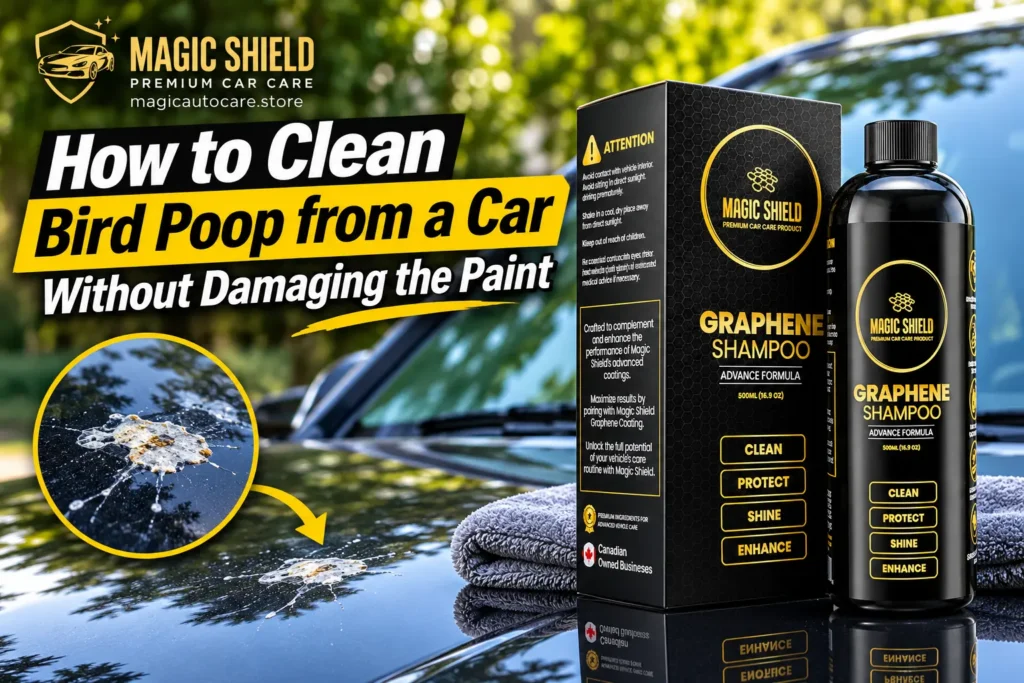
How Regular Car Washing Helps Protect Your Paint
Frequent washing is essential to remove dirt, road film, bird droppings, tree sap, and other substances before they build up. To wash effectively, you will need the right shampoo, microfiber tools, and efficient washing methods.
For drivers who want to maintain a clean finish between washes, explore Magic Auto Care’s automotive cleaning products and care options. This is a related resource for car-care products; choose products according to your vehicle’s finish and the manufacturer’s instructions.
For Canadian drivers, you can also explore the products available through Magic Shield Canada to find options suited to your regular vehicle-care routine.
How do you clean bird poop from a car without scratching it?
Wet the excrement with a damp microfiber cloth to loosen it. Gently pick off the residue, wash the area using car soap, rinse it well, and dry it with a dry microfiber towel. You should always avoid scratching the surface when washing away dried excrement.
Does bird poop permanently damage car paint?
Yes, bird droppings can cause damage to the paint if left on the vehicle paint under hot, sunny conditions. Immediate removal of the excrement will minimize its chances of creating problems, but that will not guarantee the paint will be left intact.
Can I use water to remove bird droppings from my car?
Indeed, water can be used, as it will soften the dried excrement. Then you can treat the place with a shampoo for vehicles.
Is it safe to use vinegar on bird poop stains?
Vinegar, being an acid, is not the best option when it comes to cleaning paint. It is better to begin with water and a good car wash soap. If there is still a stain, either use something designed for cleaning car paint or seek help from an auto detailing service.
Will ceramic coating stop bird poop from damaging my car?
No, while ceramic coatings do make the cleanup process easier, they do not entirely protect the vehicle from bird droppings nor prevent etching.
How quickly should I remove bird poop from my car?
As soon as possible. Heat and sunlight can increase the risk of staining, so do not wait until it is time to wash your car again.