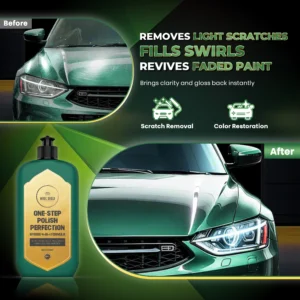
Canadian winters are brutal on car paint, i mean like really brutal. Road salt, grit, freezing rain, and months of grime do damage long before rust even thinks about showing up. So yeah that’s where car polishing comes in, you know the whole “keep it looking good” part.
Car polishing is basically the act of removing a thin layer of oxidized or otherwise worn clear coat, so the fresh shiny paint underneath can come back to the front. It’s not the same as some quick rinse at the local wash bay either, it’s more like a corrective step that brings dull, tired paint back into the spotlight.
At Magic Shield we’ve worked on vehicles from Toronto driveways to Calgary garages, and there is one thing that holds steady across the country. A good polish changes how a car looks and feels, and not just a little. This guide covers everything you should know about car polishing in Canada— what it is, why it matters, and how to get it done properly.
What is Car Polishing?
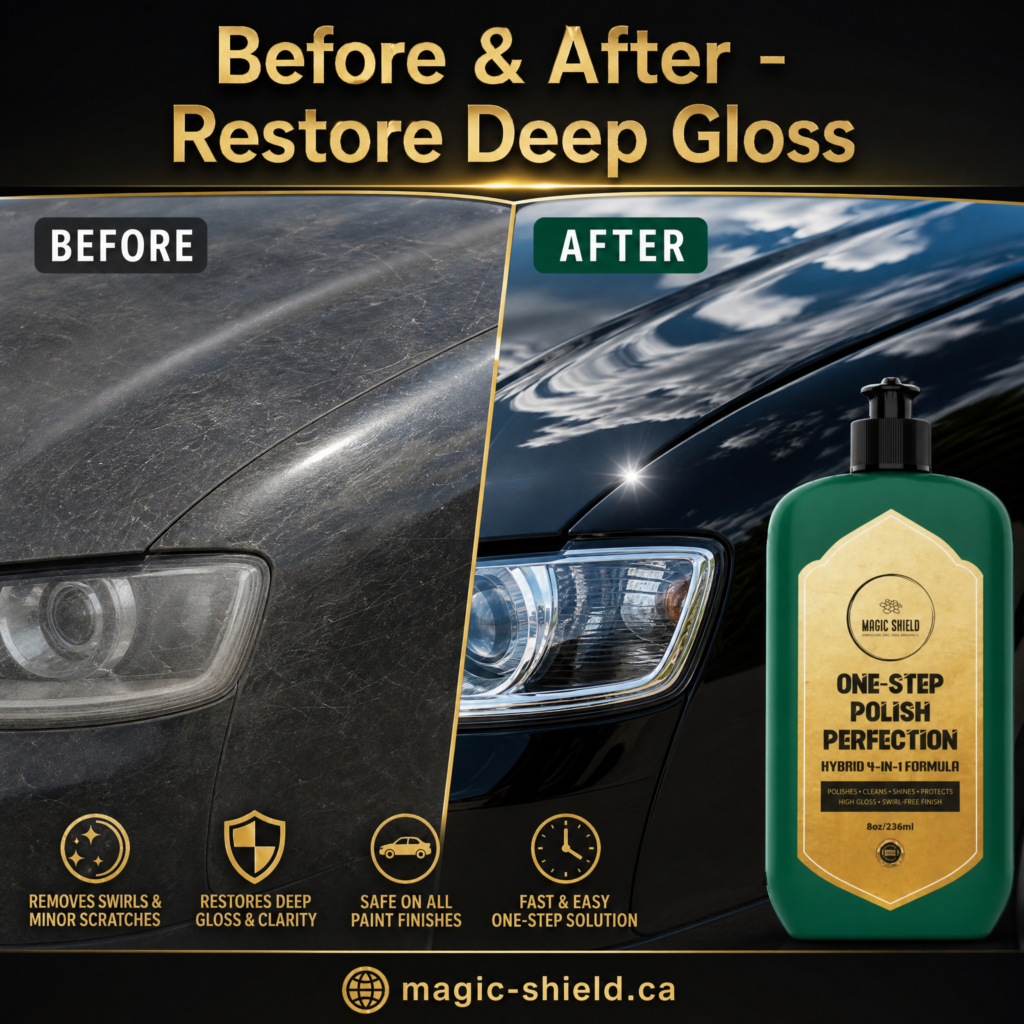
Car polishing is a mechanical process that removes microscopic layers of clear coat to deal with oxidation, minor scratches, water spots, and swirl marks. The payoff is a smoother, more reflective paint surface with gloss that looks clearly deeper, not just “a bit nicer”.
And unlike washing or waxing, polishing actually corrects the paint. It doesn’t just sit on top like a coat of confidence, it works into the surface using an abrasive compound and a polishing pad, either by hand, or with a machine— depends on the job and how stubborn the defects are.
Think of your car’s clear coat like a glass panel with tiny imperfections spread across it. Those little scratches mess with light, so the paint starts looking hazy, or flat somehow. Polishing evens the surface out so light bounces back more evenly, that mirror-like shine comes together after.
You might hear people call it paint correction when it’s done professionally, especially for deeper issues. If it’s more light duty, some folks call it a gloss enhancement polish instead, kind of the “freshen it up” version.
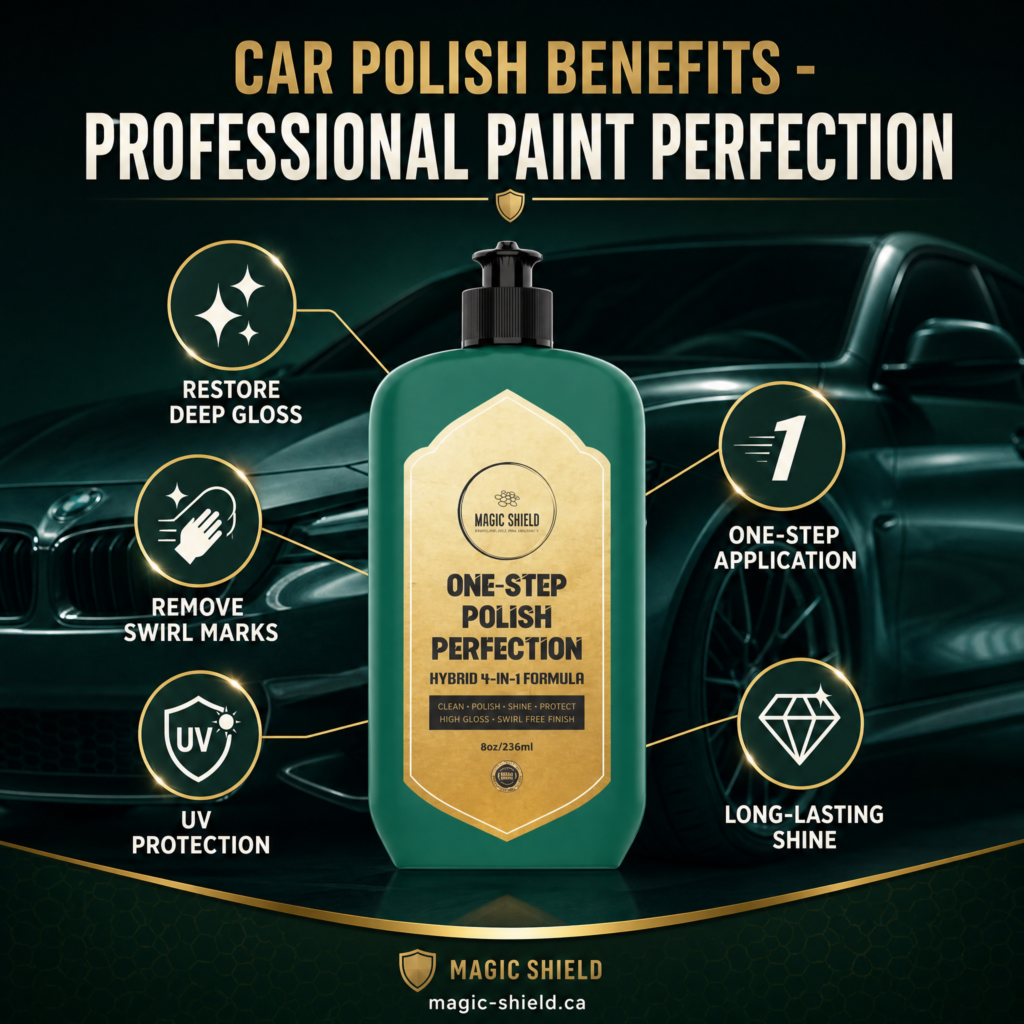
Key Purposes of Car Polishing
- Remove swirl marks and fine scratches
- Correct oxidation caused by UV exposure
- Restore paint gloss and clarity
- Prepare the surface for wax, sealant, or ceramic coating
- Improve overall vehicle paint shine
Benefits of Car Polishing
A good car polish does more than just make your vehicle look good for the weekend. It’s actually part of a longer term exterior car care routine, even if people kind of gloss over that detail. You know, the results show up later too.
It restores clarity and depth – the paint starts looking wet, glossy, and more vibrant instead of flat, chalky, or tired.
It removes surface imperfections – swirl marks, bird droppings etching, and light scratches can disappear or at least fade a lot.
It improves paint protection performance – when the surface is polished properly, wax, sealant, or ceramic coatings can grip and bond more evenly, so they tend to last.
It increases resale value – a shiny, well maintained exterior gives the impression of a well cared for vehicle, and that matters to buyers.
It protects against further damage – lifting away oxidized clear coat helps slow down long term paint degradation.
It boosts overall pride of ownership – there’s a real difference in how a freshly polished car looks, and honestly how it feels when you drive, or when you show it off.
Canadian drivers dealing with road salt in Ottawa winters, or coastal humidity in Vancouver might notice even more, since polishing helps reset the paint before applying protective layers.
Car Polishing vs Waxing vs Ceramic Coating
These three services get mixed up constantly. Here’s a clear breakdown.
| Feature | Car Polishing | Waxing | Ceramic Coating |
|---|---|---|---|
| Purpose | Corrects paint defects, restores gloss | Adds shine and light protection | Long-term chemical protection layer |
| Removes swirl marks? | Yes | No | No |
| Duration of results | Weeks to months (until next contamination) | 4–8 weeks | 1–5 years |
| Application method | Machine or hand polishing with abrasive compound | Applied by hand or machine, wiped off | Applied in controlled environment, cured |
| Best used for | Fixing damaged, dull, or oxidized paint | Adding shine after polishing | Protecting freshly corrected paint long-term |
| Cost range (CAD) | Moderate | Low | Higher upfront, lower long-term |
In short: polishing corrects, waxing enhances, and ceramic coating protects. Most professional detailing packages combine all three — polish first, then seal the results with wax or a coating.
If you’re weighing car polishing vs waxing for a quick refresh, waxing works. But if your paint has visible defects, polishing is the only real fix.
Types of Car Polish
Not every polish, is equal. Picking the right one depends on how your paint is doing, and what kind of final look you are chasing. You know, that glow thing.
- Cutting Compounds
These are heavy-duty , and kind of rough. They’re meant for deep scratches, heavy oxidation, or major paint correction. Because they remove more clear coat, it’s usually better to trust trained pros with this stuff.
- Medium-Cut Polishes
This is the middle route, more balanced. Helps remove moderate swirl marks, and mild oxidation without going too hard on the clear coat.
- Finishing Polishes
Here you get very fine abrasives. The idea is to lay down the final layer of gloss and transparency after you’ve already done cutting or medium-cut work. Little to no correction, mostly maximum shine.
- All-in-One (AIO) Polishes
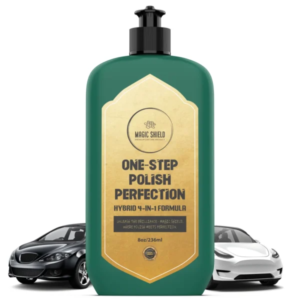
These mix light abrasives, with protective ingredients, in one step. It’s convenient and fast, but it won’t be as strong for deeper defects.
How Often Should You Polish Your Car?
Most vehicles benefit from a full car polishing treatment once or twice a year, depending on:
- Where you park (garage vs. outdoor exposure)
- Driving habits and mileage
- Climate exposure (salt, sun, humidity)
- How often the car is washed properly
General Guidelines
| Vehicle Usage | Recommended Frequency |
|---|---|
| Daily driver, outdoor parking | Every 6–8 months |
| Occasional use, garage-kept | Once a year |
| Show car / low mileage | As needed, based on inspection |
| Post-winter (road salt exposure) | Spring correction recommended |
Over-polishing isn’t a good idea either. Each session removes a small amount of clear coat, so it’s important to only correct when needed — not on a rigid schedule regardless of paint condition.
Why Choose Magic Shield Canada?
Magic Shield has built a reputation across Canada for treating every vehicle like it matters — because it does.
Here’s what sets our approach apart:
- Experienced technicians trained in modern paint correction techniques
- Quality-focused process using proper pad and compound combinations for each paint type
- Honest assessments — we tell you what your paint actually needs, not what sells the most
- Protection-first mindset — every polish is paired with recommendations for lasting car paint protection
- Service across major Canadian markets, including Toronto, Mississauga, Brampton, Vancouver, Calgary, Edmonton, Ottawa, Winnipeg, Hamilton, and Montreal
Our goal isn’t just a shiny car for a week. It’s helping Canadian drivers protect their investment against harsh weather, road salt, and daily wear — one properly corrected panel at a time.
Explore more about our services at magic-shield.ca.
FAQs:
1. What does car polishing actually do ?
Car polishing removes a very thin layer of harmed or oxidized clear coat , so it can smooth out swirl patterns, light scratches, and that washed out dull look , in general bringing back a slicker and brighter surface.
2. Is car polishing the same as paint correction ?
Not really. Paint correction is more like a wider label for fixing paint problems, and polishing is the main method inside that. Bigger repair jobs sometimes use multiple polishing steps, back to back, and in a different order too.
3. Can polishing remove deep scratches ?
Polishing can make deep scratches look less noticeable, but it usually cant erase them completely if they went past the clear coat and into the base colour. If the scratch is very severe, you may need touch up paint or even a panel re-finish instead of relying on polishing only.
4. How long does a professional car polishing service take ?
A full correction detail often takes around 3 to 8 hours , depending on how the paint looks at the start, the vehicles size , and how many polishing passes are needed. Some cars, are just more stubborn than others.
5. Does car polishing remove wax or ceramic coating ?
Yes. Polishing is abrasive by nature, so it will strip away existing wax or sealant layers, and it can also cut into ceramic coatings if the work is not careful. After that, reapplying protection is basically a must.
6. Is it safe to polish a car at home ?
It can be safe, with the right tools , correct technique and a lot of patience. Still, choosing the wrong pad , or pressing too hard, can harm the clear coat, which is why a lot of owners prefer professional car polishing for extra peace of mind.
7. How much does car polishing cost in Canada ?
The price changes with vehicle size, the current paint condition, and how intense the correction needs to be. In general it can be from budget friendly single stage services , all the way to premium multi stage work. For a real number , contact a local provider like Magic Shield for an accurate quote.
Also Read:
Car Polish Calgary: The Complete Guide to Restoring Your Vehicle