Lots of Canadian drivers have been there. After a couple weeks in winter, or even just day to day city driving, the wheels pick up a nasty build up. It is black brake dust, white salt crust, mud like grime, and bits of slush that dry in place. A normal wash can leave the metal looking flat and marked.
A good wheel cleaner is not a one size fit all choice. You need to figure out what is on the wheel first. Then you match the cleaner to that exact mess.
Brake dust and road salt are not like regular dirt. They cling, settle in, and can wear at the surface over time. The right cleaner should lift them fast and still be gentle on alloy wheels, painted finishes, and chrome.
What Makes Brake Dust So Difficult to Remove?
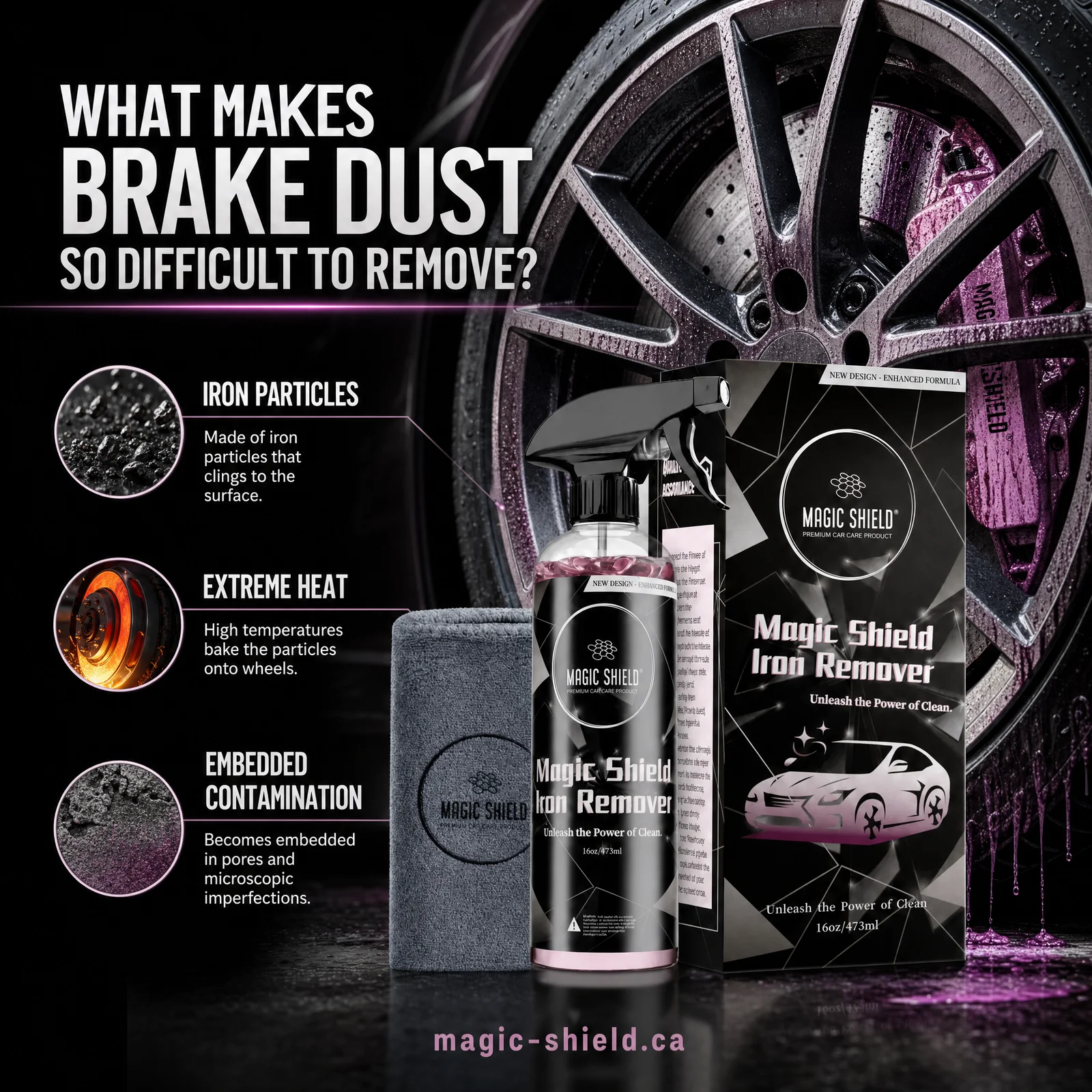
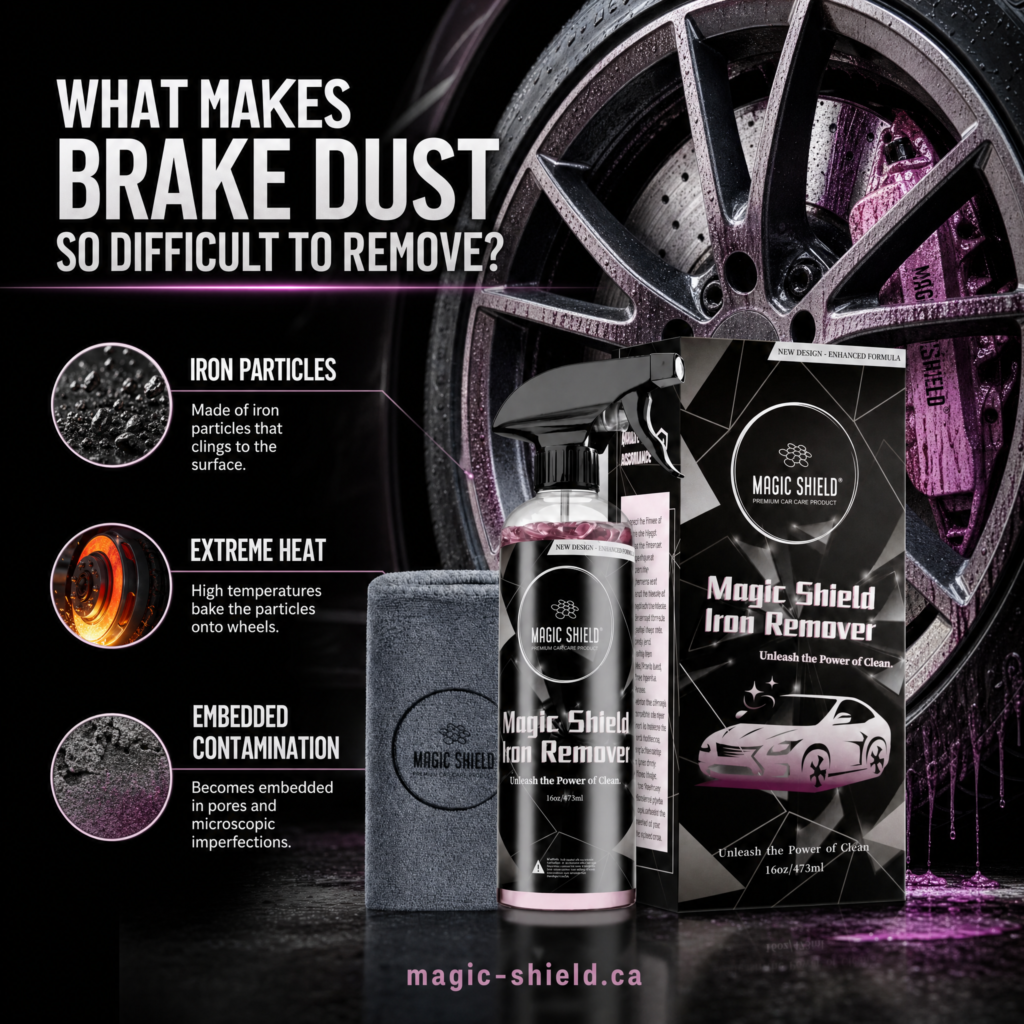
Brake dust shows up each time you hit the brakes. Small bits of metal, carbon, and pad material get torn loose from the pads and rotors. What Makes Brake Dust So Difficult to Remove? When they come out, they are still hot. They then land on the colder wheel face and start sticking there.
As days go by, the metal reacts with air. Loose powder turns into a thick dark layer. This layer does not wash off easily with plain soap and water. You may see it faster on newer cars, and some models use pad types that leave more buildup behind. If you let it sit, it can dull or mark the clear coat and paint over time.
A normal car shampoo can lift dirt on top, but it often cannot break the bonded iron bits free. That is why wheel cleaners made for this job tend to work better.
Why Is Road Salt Harmful to Car Wheels?
In Canada, road salt and brine go down a lot from late fall until early spring. The salt lowers the freezing point of water, so the roads do not ice over as easily. But when salt mixes with snow, slush, and road grit, it turns into a harsh, corrosive mix.
That mix clings to tires and to the lower parts of the car. When it dries, the salt left behind does not just vanish. It keeps pulling in water from the air. Over time, this speeds up rust on metal that is not well protected, and it can mark alloy finishes. It also leaves a rough film that is difficult to wash off.
Brake dust adds to the problem. Together, they form a layer that is even harder to remove. So seasonal car care in Canada needs to plan for winter conditions, not just wait for spring.
What Should You Look for in the Best Wheel Cleaner?
Start by judging how well the cleaner handles what Canadian roads actually leave behind.
Can it lift brake dust in a real way, What Makes Brake Dust So Difficult to Remove? or does it only make the wheel look shiny for a short time?
When salt and winter grime coat the surface, does it cut through the greasy film?
Also check wheel safety. A good mix should be pH balanced and not corrosive. It should not harm clear-coated alloys, polished rims, or chrome.
Does it go after iron spots, not just dirt on top? It needs to pull out ferrous particles that sit in the finish.
Think about day to day use too. A spray bottle, a quick wait time, and an easy rinse help people use it often.
Finally, make sure it is fine for alloy wheels. Most wheels today have clear coats. Harsh acids can cause problems later.
A cleaner that only removes loose grime can still impress at first. But a product that deals with iron buildup and salt residue tends to last longer. It also sets up the wheel better for any later protection products.
Regular Wheel Cleaner vs Iron Remover: What Is the Difference?
| Feature | Regular Wheel Cleaner | Iron Remover | Brake Dust Remover (often overlap) | Car Shampoo | All-Purpose Cleaner |
|---|---|---|---|---|---|
| Primary target | Surface dirt, light grime | Embedded iron particles, brake dust, rail dust | Brake dust specifically | General exterior dirt | Multi-surface light cleaning |
| Chemistry | Detergents, sometimes mild acids | Iron-reactive (colour-changing) | Often alkaline or specialized | Mild surfactants | Alkaline detergents |
| Visual reaction | None | Turns purple/red as iron dissolves | Sometimes colour change | None | None |
| Best for | Routine maintenance | Stubborn or bonded contamination | Heavy brake dust | Full-car wash | Quick wipe-downs |
| Surface safety | Varies | Usually pH-balanced | Check label | High | Check dilution |
| When to choose | Light weekly cleaning | After winter or heavy urban driving | Visible black buildup | Every wash | Interior/exterior light use |
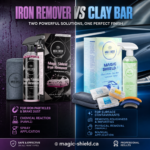
Wheel cleaners are made to lift loose road dirt and thin grime. Iron removers work differently. They use active chemistry that targets iron particles. The iron changes into a kind of residue that water can wash away. That is why iron remover helps when brake dust has set hard. It also helps when the wheel seems clean after washing but still feels gritty or shows dark marks.
Car shampoo is made for painted surfaces and it is not strong enough for tough wheel buildup. What Makes Brake Dust So Difficult to Remove? All-purpose cleaners may cut some dirt. Still, they are not built for iron or salt stuck on wheel surfaces.
Why an Iron Remover Can Help With Stubborn Brake Dust
Brake dust can be tough. After heat cycles it can stick hard to the paint or wheel clear coat. Road salt can make it worse. If you only scrub, you may add scratches to the finish.
Iron remover does a different job. It uses chemistry. The active parts grab onto iron bits and break them down. A lot of products show a clear color shift, often purple or red, while the reaction happens. That color change helps you see that the iron contamination is loosening.
This is a good fit for a few cases:
- Wheels that still look grimy even after a basic wash
- Cars that see lots of stop-and-go driving
- Cleaning after winter, when salt and iron both left residue
- Getting ready for clay, polish, or ceramic coating
Use iron remover as a targeted step, not as a daily routine. It is for moments when regular cleaners do not handle the mess.
Is Magic Shield Iron Remover a Good Option for Canadian Drivers?
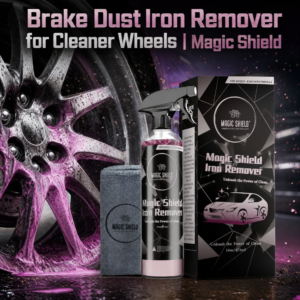
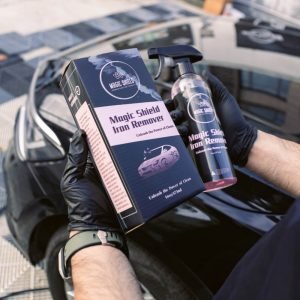
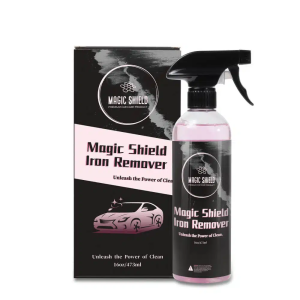
If you drive in Canadian winter and deal with daily brake dust, Magic Shield Iron Remover for Cars is made for that mess. It goes after brake dust and iron bits that get stuck in the surface. As it reacts, it shows a clear purple color shift so you can see it is working. The formula is pH balanced and not harsh, so it is safe on paint, wheels, glass, plastic, and chrome as long as you follow the label.
This can also fit into a normal prep routine. Many people use it before they use a clay bar, before polishing, or before adding a protective coating. In Canada, road salt, slush, city brake dust, and grime from the air are common. A product like this helps tackle all of that in one step.
Be sure to do it the right way. Work only on cool surfaces. Let it sit for the time stated on the instructions. Then rinse well before it dries.
Magic Shield has other items that pair well with this. You can use Graphene Shampoo for routine washes. A Clay Bar Kit helps lift what is still bonded. What Makes Brake Dust So Difficult to Remove Prep Spray can be used for final surface work. There are also ceramic coating options if you want longer cover.
Using an iron remover as part of a set usually gives better results than using only one product.
How Often Should You Clean Car Wheels?
How often you clean depends on how you drive:
- City driving, lots of stops: use a wheel cleaner about every 1 to 2 weeks. Use an iron remover around every 4 to 8 weeks, or sooner if needed.
- Winter roads with salt: rinse more often. Plan a deep clean about once a month, or right after big storms.
- Highway trips or fewer miles: cleaning about every 2 to 4 weeks is usually enough.
Also, do this before you add protection like coatings or sealants: clean the wheels well first. Include iron removal when you see iron type contamination.
Best Wheel Cleaner for Canadian Winter Conditions
Canadian winter roads mix salt, wet slush, rough grit, and brake dust all at once. That combo sticks fast and builds up.
A solid way to handle it is to go in layers:
First, rinse often so the salt does not sit too long.
Next, use a real wheel cleaner, or an iron remover, to lift stuck grime.
Then, dry well and take a close look for missed spots.
After that, you can add a wheel sealant or coating to slow new buildup.
An iron remover helps a lot in late winter and early spring. By then, there is usually a pile of deposits that needs careful attention. Use it with a good wheel shampoo and work it in the right way, and the wheels stay cleaner for longer. It also helps protect the finish underneath.
FAQ’s
What is the best wheel cleaner for brake dust?
What you should use depends on how bad the mess is. If it is only a light film, a wheel cleaner made for regular use usually does the job. If the grime is stuck on, or you see heavy brake dust, choose an iron remover instead. These products break down the iron particles so the residue releases more easily.
Can I use an iron remover on alloy wheels?
Yes, but it needs to be pH-balanced. Also, the maker has to say it is okay for alloy and clear-coated wheels. Before you use it, test it in a small hidden spot. Then follow the label instructions exactly.
Does wheel cleaner remove road salt?
A lot of people handle light surface salt and grime well.
If the salt is heavy or dried on, rinse it well first.
After that, use a good cleaner.
If there is any metal contamination, add an iron remover too.
How do I remove stubborn brake dust?
Let the wheels cool down first. Rinse them well. Put on an iron remover or a strong wheel cleaner. Wait for the dwell time on the label. If you must, scrub lightly to help it work. Rinse off everything with plenty of water. Do not let the cleaner dry on the metal.
What is the difference between wheel cleaner and iron remover?
Wheel cleaners are meant for everyday grime and a thin film of dirt.
Iron removers are made for iron specks that sit in the surface.
They work to dissolve those iron particles and many products show a color change while doing it.
Can I use iron remover on car paint?
Some iron removers made for home use are fine for paint, glass, and wheels. This can include products that are pH balanced. Use the directions on the label. Double check what the label says.
How often should I deep clean my wheels?
About every four to eight weeks when conditions are normal. In winter, or if there is a lot of brake dust, do it more often. You can also clean it lightly more frequently if you want.
What is the best wheel cleaner for Canadian winter conditions?
It deals with both salt and slush buildup, plus brake dust that sticks tight. If you use an iron remover as a normal maintenance step, it works very well on the kind of mess you see on Canadian roads.