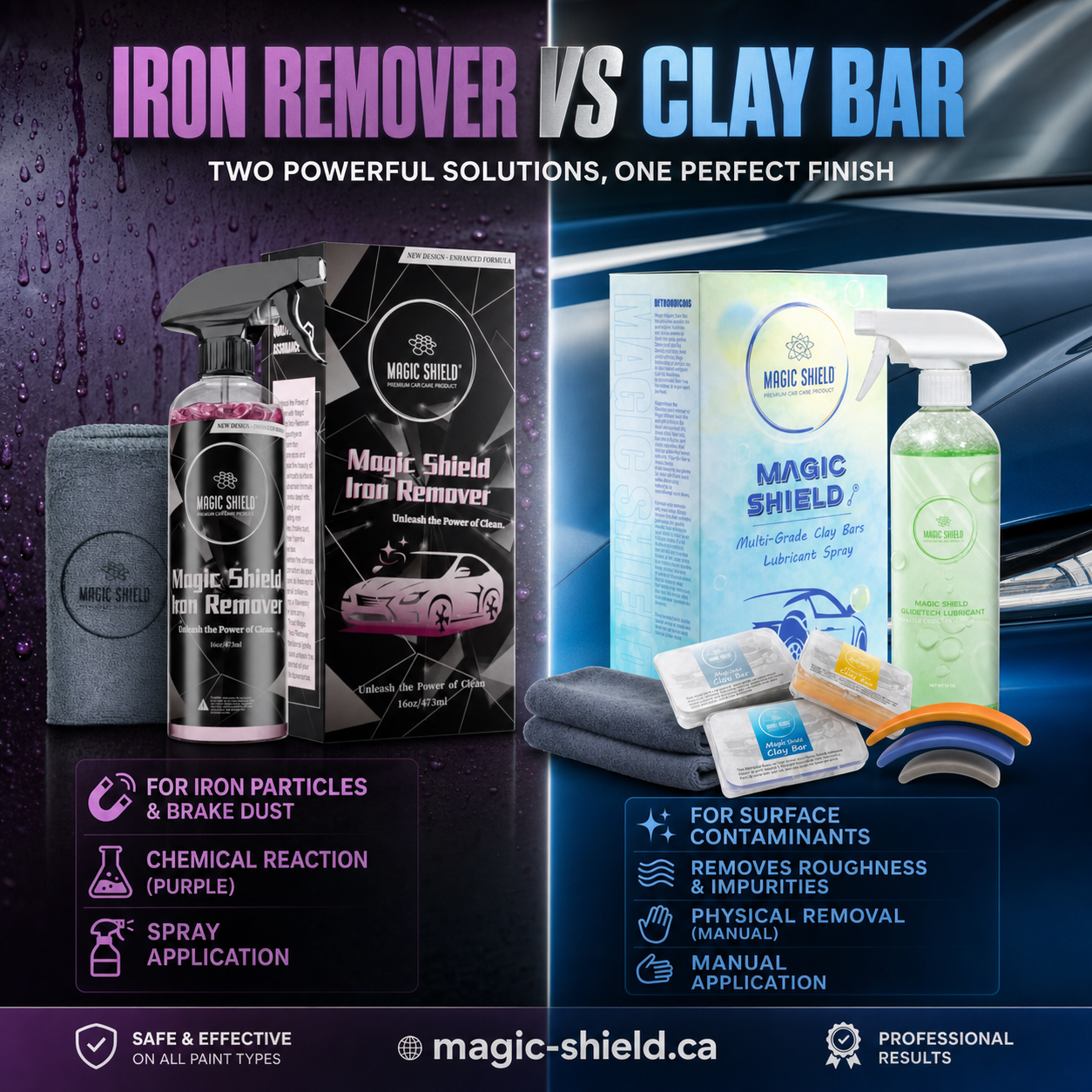
If the surface stays rough after a wash, you may wonder whether to use iron remover or a clay bar. The short answer is that they do not do the same job.
Iron remover is a chemical option. It break Iron Remover vs Clay Bar
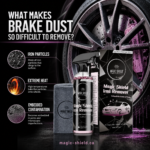
s down small iron particles that sit on the clear coat. It is also made for brake dust and other metal specks. Many products show a color change as they react.
A clay bar works by touch. You slide it over the finish Iron Remover vs Clay Bar
and it grabs debris that is stuck in place. It can pull off road grime, tar, tree sap, Iron Remover vs Clay Bar
overspray, and other bits that a basic wash might miss.
So do not assume one tool is always better than the other. Look at what is Iron Remover vs Clay Bar
on the paint and pick the tool that fits that problem.
For a complete decontamination, you can use both. Use themIron Remover vs Clay Bar
in the proper order. When you are done,Iron Remover vs Clay Bar
the paint should feel smoother. After that, you can polish, wax, or apply a ceramic coating.
Iron Remover vs Clay Bar
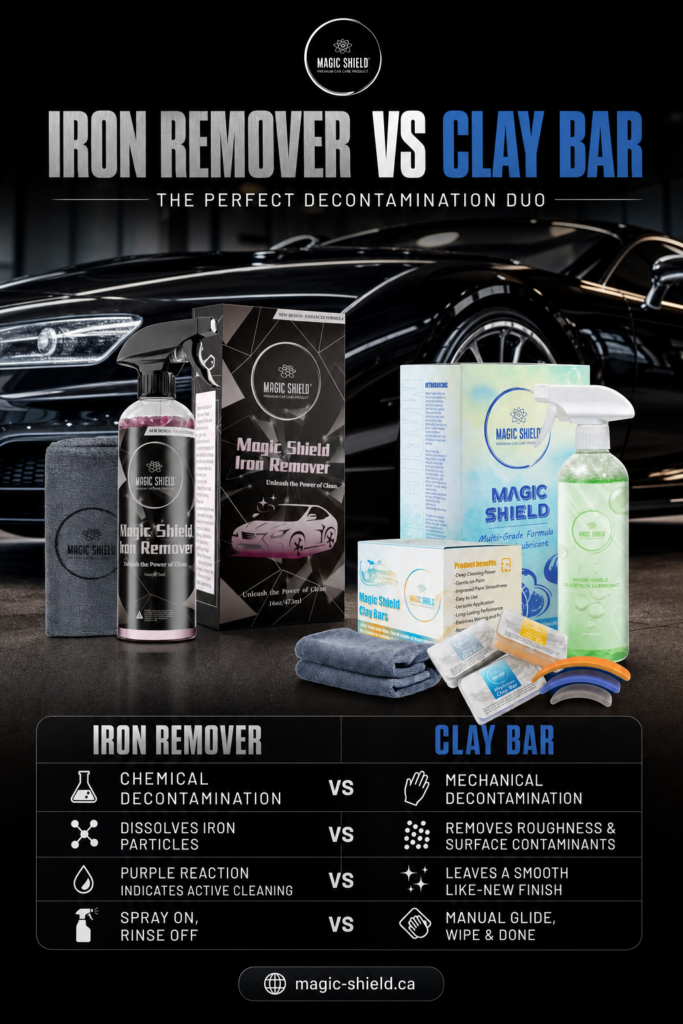
| Feature | Iron Remover | Clay Bar |
|---|
| Main job | Dissolves iron contamination | Removes bonded surface contamination |
| Type of decontamination | Chemical | Mechanical |
| Best for | Brake dust, iron fallout, metallic particles | Tar, sap, overspray, bonded grime |
| Application | Spray, dwell, rinse | Glide over lubricated paint |
| Physical contact | No rubbing required | Requires contact with the paint |
| Best order | Use first | Use after iron removal |
| Before ceramic coating | Recommended | Recommended if contamination remains |
The best approach for most thorough detailing jobs is:
Wash → Iron Remover → Rinse → Clay Bar → Polish if needed → Prep → Protect
What Is an Iron Remover?
Iron remover is a car cleaner made to deal with metal bits. It helps loosen small iron marks on the surface. These tiny specks can stick toIron Remover vs Clay Bar
the paint and other areas of a vehicle.
Iron usually shows up from Iron Remover vs Clay Bar
everyday driving and nearby sources, like these:
- Brake dust that builds up during normal trips
- Dust from rail lines near trains
- Fallout from job sites in the area
- Small road metal particles
- General road travel over time
In some cases, you cannot spot the spots at once.Iron Remover vs Clay Bar
They can stay on the clear coat even after you rinse and wash the car like usual.
A good iron remover will react once it meets metalIron Remover vs Clay Bar
contamination. While it is doing its job, the product changes colour. That colour change helps you see where it has worked.
Magic Shield Iron Remover is made for iron fallout.Iron Remover vs Clay Bar
It goes after brake dust and rail dust as well. It can also be used as a step for paint prep before claying, polishing, or applying a coating.
When do you need an iron remover?
You might want an iron remover if any of these are true:
- Your wheels have thick brake dust on them
- You drive in the city a lot and the car picks up grime from the road
- You see small orange or brown dots on the paint
- You are getting the vehicle ready for polishing
- You want to put on a ceramic or graphene coating
- You have not done a deep decontamination in a while
Iron remover products work well on Iron Remover vs Clay Bar
wheels and on lower panels. They also help on spots where road fallout builds up the most.
What Is a Clay Bar?
A clay bar is used in car detailing to physically remove grime that washing does not get.
You can wash the car and the paint can still feel bumpy. Run your palm over the surface. If it catches or feels rough, that usually means stuff is stuck to the clear coat.Iron Remover vs Clay Bar
Iron Remover vs Clay Bar
Regular soap and water often cannot lift it.
A clay bar may pick up things like these:
- Grime from the road that is stuck on
- Sticky tree sap residue
- Overspray that landed on the paint
- Fallout and tiny specks from the air
- Industrial fallout and similar contaminants
- Other particles that sit in the finish
To use it, you apply a lubricant. The product then slides over the paint. Iron Remover vs Clay Bar
It should not scrape across a dry panel.
When you are done, the paint should feel smoother. It should also look cleaner.
When do you need a clay bar?
Use a clay bar if any of these are true:
- The paint feels gritty after you wash it.
- You plan to polish the surface soon.
- You are about to add wax, sealant, graphene coating, or ceramic coating.
- There is overspray on the car, or grime that seems stuck on.
- You want the paint to feel smooth to the touch.
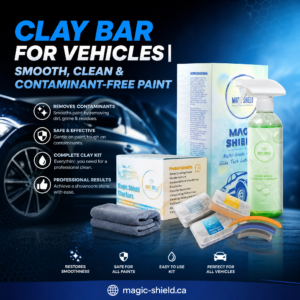
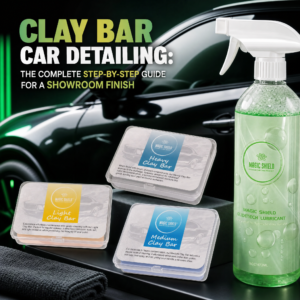
The Magic Shield Clay Bar Kit is made for paint prep. You can use it after you deal with iron contamination.
Iron Remover vs Clay Bar: What Is the Difference?
The main difference between an iron remover and a clay bar is the way they handle contamination.
An iron remover reacts chemically to break down iron particles.
A clay bar lifts and pulls dirt off the surface in a physical way.
So they do not fully replace each other.
Iron Remover: Chemical Decontamination
An iron remover works on ferrous dirt, such as small metal flecks and brake dust.
Rather than scrubbing the panel, it reacts with the iron and helps you wash the residue off.
That is why it is handy before you use a clay bar, since a lot of iron can make the clay work harder than it should.
Clay Bar: Mechanical Decontamination
A clay bar will lift stuck grime off the paint.
It can handle several kinds of residue that an iron remover might miss.
So, while an iron remover can break down some metal particles, it may still leave behind tree sap spots, paint overspray haze, or road film that has attached itself.
That is why people use a clay bar.
Which Is Better: Iron Remover or Clay Bar?
They are not automatically better. They handle different issues.
Pick an iron remover if your main issue is:
Brake dust
Metallic specks
Iron particles
Rail dust
Deep paint contamination before you polish or apply a coating
Pick a clay bar if:
You care most about one of these:
- Paint that feels rough
- Dirt that is stuck to the clear coat
- Tree sap
- Overspray spots
- Grime that is still there even after you wash
Use both products if you want a full cleaning before any of these:
- paint correction
- polishing
- ceramic coating
- graphene coating
- long-term paint protection
If you want the best outcome, using themIron Remover vs Clay Bar
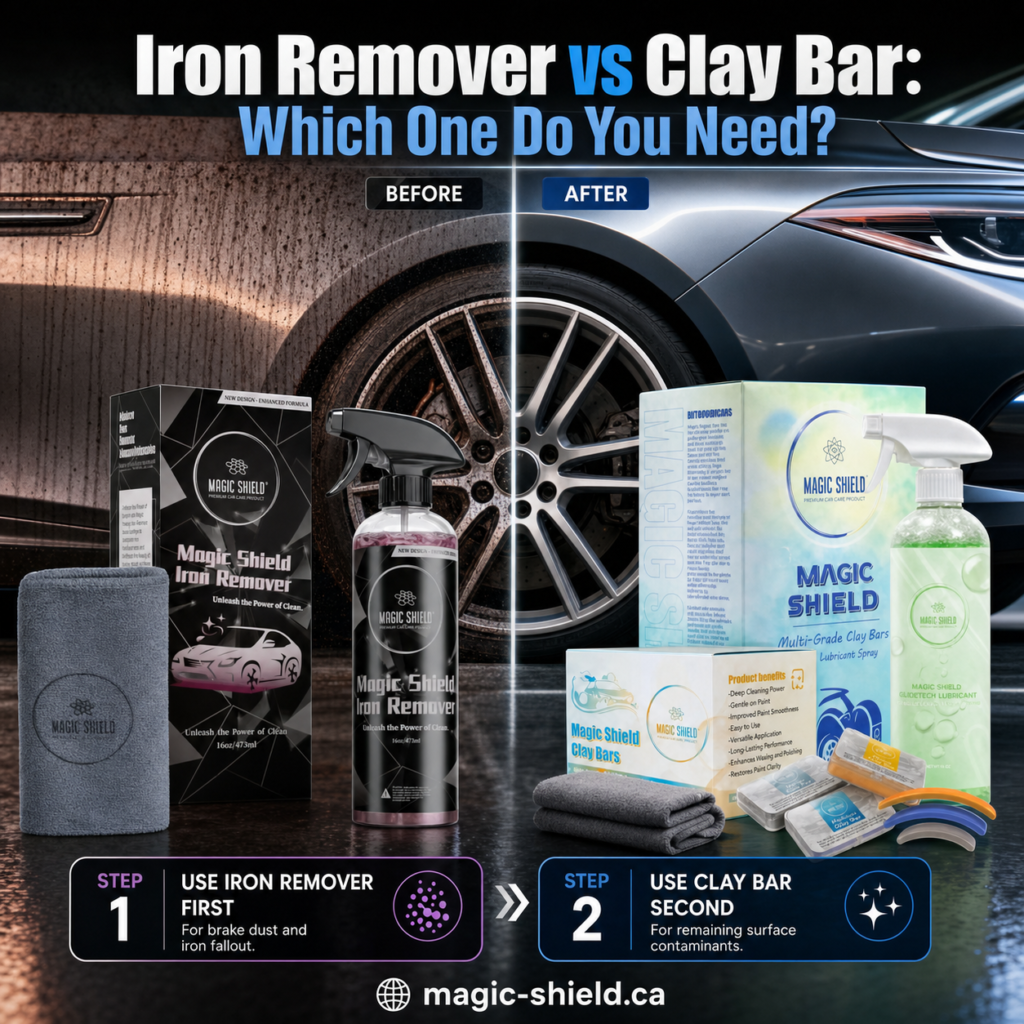
.
Should You Use Iron Remover Before a Clay Bar?
Yes, in a full paint decontamination step, you usually use iron remover before the clay bar.
Starting with iron remover breaks down any iron fallout first, so the clay is not forced to deal with it right away.
That can mean less leftover grime for the clay bar to lift.
The steps are straightforward:
Step 1: Wash the Vehicle
Rinse the car well at first to get rid of loose dirt, dust, and road grime.
Skip claying if the surface is very dirty.Iron Remover vs Clay Bar
Loose bits can grind into the paint and cause scratchesIron Remover vs Clay Bar
.
Step 2: Apply Iron Remover
Put the iron remover on a surface that is cool. Use the steps on the label.
Focus on these spots:
Wheels
Lower body panels
Places with brake dust you can see
Paint that looks very dirty
Let it sit for a bit so it can work. Do not let it dry on the car.
After that, rinse everything well.
Step 3: Inspect the Paint
Rinse it first. Then take a close look at the paint. Iron Remover vs Clay Bar
Run your hand over the surface. If it still feels bumpy or gritty, there may be leftover grime stuck to the clear coat.
Step 4: Use a Clay Bar
Add a good amount of proper lubricant before you start.Iron Remover vs Clay Bar
Do small sections only. Move slowly and press very gently. As you work, the clay should move over the paint without sticking or dragging.
Step 5: Inspect Again
Once the claying step is done, the paint should feel much smoother.
After that, you can go on to the next prep step.
What happens next depends on how the paint looks. Sometimes you polish first. Other times you use a prep product before you add protection.
Can a Clay Bar Remove Iron Contamination?
A clay bar can lift certain grime from paint by physical contact. It can grab bits that are stuck on the surface.
An iron remover is made to deal with iron dirt in a chemical way.Iron Remover vs Clay Bar
It works by reacting with that metal contamination and breaking it down.
If you see a lot of brake dust or rusty specks, start with the iron remover. It often helps the next steps work better.
Do not treat a clay bar as a full swap for iron removal chemicals.Iron Remover vs Clay Bar
If the main problem is iron fallout, a clay bar alone will not fix it.
Can an Iron Remover Replace a Clay Bar?
No, not for every case.
An iron remover is made to pull out iron and metal particles.
A clay bar can lift other stuck-on stuff that is still left after chemicals do their job.
For instance, after an iron remover, the paint might still show:
Tree sap marks
Paint overspray
Road dirt that is stuck in place
Other non-metal debris
Even if the color looks clean, the surface can feel gritty.Iron Remover vs Clay Bar
If it still feels rough, you may need a clay bar tooIron Remover vs Clay Bar
So the usual answer for iron remover versus clay bar is not always to pick just one.
Use the right product for the contamination you are trying to remove.
Do You Always Need Both?
Maybe not.
If you are doing normal upkeep, you might skip a full decontamination step each time you wash.
Still, it can help to use both products when you are working through tougher stages, like this:
Getting ready for a ceramic coating
Getting ready for a graphene coating
Polishing the paint
Dealing with heavy buildup
Fixing up a car that was ignored for a long time
Doing a full detailing session
If the main issue is brake dust that builds up hard on the wheels, an iron remover alone may do the job.
If the paint surface feels rough and gritty, where stuff has stuck down, a clay bar is often the better choice.
Iron Remover vs Clay Bar
Before you apply a coating meant to last, it is usually smart to spend extra time on prep first.
Iron Remover vs Clay Bar Before Ceramic Coating
Getting ready the surface is the biggest step when you apply ceramic coating.
The coating will only do its job well if the panel is clean and properly prepped first.
A common prep flow looks like this:
Wash the car well
Remove iron fallout if you see it
Use clay when needed to lift stuck grime
Fix the paint if it needs polishing
Prep the surface for coating
Apply the ceramic or graphene layer
If you rush and skip contamination removal, you can trap leftovers under the coating.
For a do-it-yourself paint protection job, try to give every step a clear reason.
Iron Remover targets metal specks on the surface.
Clay Bar lifts any leftover grit that is stuck on.
Polishing can freshen the paint look if some correction is needed.
Prep Spray gets the surface ready before any coating goes on.
Ceramic or Graphene Coating is the last shield layer.
Together, this gives a full finish.
Clean → Decontaminate → Prepare → Protect
workflow.
Why This Matters for Canadian Drivers
Canadian cars can pick up different kinds of dirt as the year goes on.
In winter, you often see:
Road salt
Slush
Road grime from heavy use
Thick buildup on the roadway
In the warmer months, cars can still collect other stuff, like:
Brake dust
Industrial deposits
Wet weather residue
General road grime
Tree sap
Dust and small particles from the environment
Because of this, a good paint care routine should not stop at a normal wash. It should also deal with what is left behind on the paint.
An iron remover can be used when you notice metal fallout. A clay bar can then lift residue that sticks to the surface.
If you are trying to protect your paint for the long haul, the right decontamination steps help you start with a cleaner base.
How Often Should You Use Iron Remover or a Clay Bar?
A few things affect how often you should do this, such as:
- How much you drive
- The roads you use
- How much brake dust ends up on the finish
- Whether the car sits outside
- Whether you are about to polish or apply a coating
You likely do not have to clay the car every month.
Doing too much mechanical decontamination can add extra steps. If the work is not done well, it can also lead to marks in the paint.
You can do iron removal when it is needed. Base it on how contaminated the surface seems and follow the product directions.
After you wash, a good quick check is to feel the paint.
If the surface feels smooth, you may not need a harsher step.
If it feels rough, look closely at what is on the surface. Then pick the right product for it.
Common Mistakes to Avoid
Clay bar on a dirty car
Wash the car first.
Small grit can get caught between the bar and the paint.
Not enough lube
A clay bar has to move with the right amount of lubricant.
Never scrub with a dry clay bar on the paint.
Letting iron remover sit too long
Put iron remover on a cool panel.
If you can, stay out of bright sun.
Rinse it off before it dries.
Overdoing the Pressure
Clay should move smoothly over the paint.
You do not need to press hard. Hard pressing can leave marks.
Assuming One Product Handles Everything
An iron remover and a clay bar are made for different kinds of dirt.
Pick the right product for the job. That choice often gives cleaner results than forcing one product to do all work.
The Best Paint Decontamination Process
Most DIY detailing jobs work well with this order.
1) Wash
Rinse the car and lift loose dirt and grime.
2) Iron Removal
Apply an iron remover to deal with brake dust and iron fallout.
3) Rinse Again
Rinse well to take away the cleaner and the dissolved residue.
4) Clay the Paint
If the surface feels gritty, use a clay bar with a bit of lube.
- Polish if the finish needs it
If you see swirls, light scratches, or dull oxidation, polishing can help. - Clean the surface
Wipe off leftover oils and any polishing haze before you apply anything on top. - Seal or coat the paint
Use the right paint protection, like a ceramic or graphene coating.
FAQ’s
Is an iron remover better than a clay bar?
An iron remover usually does a good job on iron bits and brake dust. A clay bar tends to handle more types of stuck gunk on the paint. So they are not the same thing.
Which comes first, iron remover or clay bar?
Start with an iron remover. Let it break down the iron spots, then rinse everything off. After that, use a clay bar to lift any leftovers that are still stuck to the surface.
Do I need to use both an iron remover and a clay bar?
If you want full paint decontamination, especially right before a ceramic or graphene coating, it can help to use both steps. This usually gives a cleaner finish.
Can a clay bar remove brake dust?
A clay bar can pick up some grime on the paint surface.
Still, an iron remover is made for a different job.
It is meant to dissolve iron specks and brake dust more directly.
Can I use iron remover before ceramic coating?
Yes. People often remove iron during surface prep. They do it before polishing or before they put on paint protection.
How do I know if my car needs a clay bar?
Once you finish rinsing and washing the car, run your hand over the paint. Use light pressure. If it feels jagged, or like there are tiny grains stuck on it, something can be attached to the surface. In that case, clay decontamination could help.
Can iron remover damage car paint?
Use the automotive iron remover exactly as the maker says. Put it on a cold or cool to the touch area. Don’t let it dry out. After that, rinse it well until no residue remains.
Should I polish after using a clay bar?
Sometimes polishing is not needed. If the paint looks fine already, you can skip it. But if you see swirls, small scratches, or other obvious flaws, polishing can help. Do it before you add any coating.
What should I apply after iron remover and clay bar?
Once the area is cleaned, take a close look at the paint. What you do next depends on how the surface looks. If it is dull or rough, polish it first. In other cases, you may need a surface prep product. After that, choose one option, like wax or a sealant. You can also use a ceramic coating. Some people use a graphene coating instead.