Table of Contents
Even a just-washed car can feel kind of gritty or rough when you touch it. That texture isnt dirt your soap somehow missed—it’s contamination that stuck itself right to the clear coat, kinda like its part of the finish. A clay bar for vehicle surfaces is basically the detailing industry answer to this issue, it lifts out embedded particles that washing alone cant deal with.
This guide sort of explains what a vehicle clay bar actually does, when you really should use one, and how to do it safely—whether you are getting ready for wax, sealant, or a ceramic coating, or you just want paint that feels good, not only looks good.
What Is a Vehicle Clay Bar?
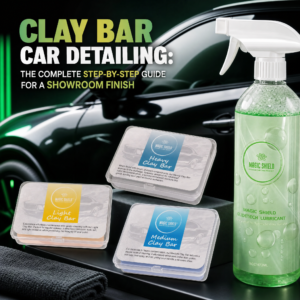
A vehicle clay bar is a bendable, resin-based detailing tool meant to pull surface contaminants out of paint, glass, and other outside finishes. Unlike soap, which rinses away loose grit, clay physically catches particles that have bonded to the paint on a tiny microscopic scale.
Think of it more like exfoliation, not standard cleaning. Where a wash handles what’s sitting on top of your paint, an automotive clay bar deals with what’s really stuck in there.
How Does Clay Bar for Vehicle Detailing Work?
When you knead and glide a clay bar over lubricated paint, the bar’s slightly grabby surface catches microscopic debris, and it pulls that stuff away from the clear coat. As the clay starts taking on contaminants, you fold it, exposing a fresher area, and you keep moving section by section.
You end up with a surface that’s mechanically smoother, not just “cleaner.” You can actually feel the difference too, like when you run your hand across the paint afterward.
What Can a Clay Bar Remove From Your Vehicle’s Paint?
Regular washing is kinda meant to lift whatever is just sitting on the surface, dust , and general gunk. It is not really designed to chase down stuff that has chemically or physically bonded to the paint. A clay bar for vehicle treatment goes after that stubborn layer, the stuff that won’t move easily, including :
Industrial fallout , the little metal flecks that come from factories , foundries, and even construction work
Rail dust , iron bits released from train brakes, pretty common if you’re near tracks or rail yards
Overspray — that fine spray mist from nearby painting jobs , landing on your clear coat
Tree sap and pollen residue — sticky organic buildup that sort of bakes itself onto the finish when the sun is hot
Brake dust — abrasive metallic particles , especially around wheel arches and the lower body panels
Bug residue and bird droppings — contaminants with more acidic behavior, that can slowly etch the clear coat over time
Road grime and tar — that highway kicked mess, often worse after wet stretches or salted roads
If your paint feels rough, gritty, or a little bumpy even right after a wash, then those bonded deposits are almost always the real reason.
Signs Your Vehicle Might Need a Clay Bar Treatment
Before you jump into a full decontamination, it’s smart to figure out what you’re actually dealing with.
The “Baggie Test”
Get a plastic sandwich bag, put it over your hand, and then softly glide it across the hood or roof of a clean, dry vehicle.
Smooth glide = likely no major surface contamination
Bumpy or gritty feel = those particles are bonded to the clear coat, and a clay bar treatment is a good idea
This small check is honestly one of the more reliable ways to confirm whether your car needs decon, and it can be done by basically any owner in under a minute.
When Should You Clay Bar Your Vehicle?
Most vehicles do better with clay bar detailing two to four times per year, but it really depends on where you drive. So think about claying your vehicle when
- Before applying wax, paint sealant, or ceramic coating
- After winter driving , when road salt and grime build up pretty fast
- If you park near industrial areas, rail lines or construction zones
- Before a paint correction or polishing session
- When the paint surface feels rough even though you wash regularly
Canadian winters are especially rough on paint. Road salt , brine, and grit used for de-icing can leave mineral deposits that cling to the clear coat after months of exposure, so a spring clay bar session is pretty valuable for vehicle owners all across the country.
How to Use a Clay Bar Safely (Step-by-Step)
If it’s done right, clay bar detailing is safe for clear coat, glass, and chrome. If it’s done carelessly, it can cause fine scratches, sometimes called marring. Basically, the process matters as much as the clay bar itself.
What You’ll Need
- A quality automotive clay bar for vehicle (fine or medium grade, depending on how contaminated the paint is)
- A dedicated clay lubricant or detailing spray
- Two clean microfiber towels
- A vehicle that’s been washed already and fully dried
Step-by-Step Process
- Wash and dry the vehicle first. Never clay a dirty car — loose grit will scratch the paint during the claying process.
- Work in small sections. Focus on roughly a 2×2 foot area at a time.
- Spray the lubricant generously. The surface should stay wet throughout — dry claying causes marring.
- Glide the clay flat across the surface. Use light, straight-line motions. Let the clay do the work; don’t press hard.
- Fold the clay regularly. Once a section is exposed to contaminants, fold to a clean surface to avoid dragging debris across the paint.
- Wipe the section dry with a clean microfiber towel before moving to the next area.
- Inspect with a bare hand. The paint should now feel glass-smooth.
- Discard clay that’s been dropped on the ground — grit embedded in the clay will scratch your paint on the next pass.
Once the entire vehicle has been treated, it’s in an ideal state to accept polish, wax, sealant, or ceramic coating, since none of these products can properly bond to paint with contaminants sitting on the surface.
Clay Bar vs. Washing: Why Regular Washing Isn’t Enough
| Regular Wash | Clay Bar Treatment | |
|---|---|---|
| Removes loose dirt | Yes | Yes |
| Removes bonded/embedded contaminants | No | Yes |
| Improves paint smoothness | Minimal | Significant |
| Preps paint for wax/sealant/coating | Not sufficient alone | Yes |
| Frequency needed | Weekly/bi-weekly | A few times per year |
Washing and claying aren’t competing steps — they’re complementary. Washing should always happen first, with claying reserved for periodic deep decontamination.
Picking the Right clay bar detailing products in Canada
Not all clay bars are made the same, and yeah Canadian conditions throw in some extra thinking. You really want to look for
- Grade that matches your paint s condition — fine grade for light upkeep, medium grade when there s heavier contamination
- A real clay lubricant, not just plain water, because it cuts friction and helps protect the clear coat
- Formulas that handle cold weather issues like road salt film, and that nasty winter grime buildup
- Products that play nice with polishes, sealants, and coatings, so you get a full paint care routine instead of random steps
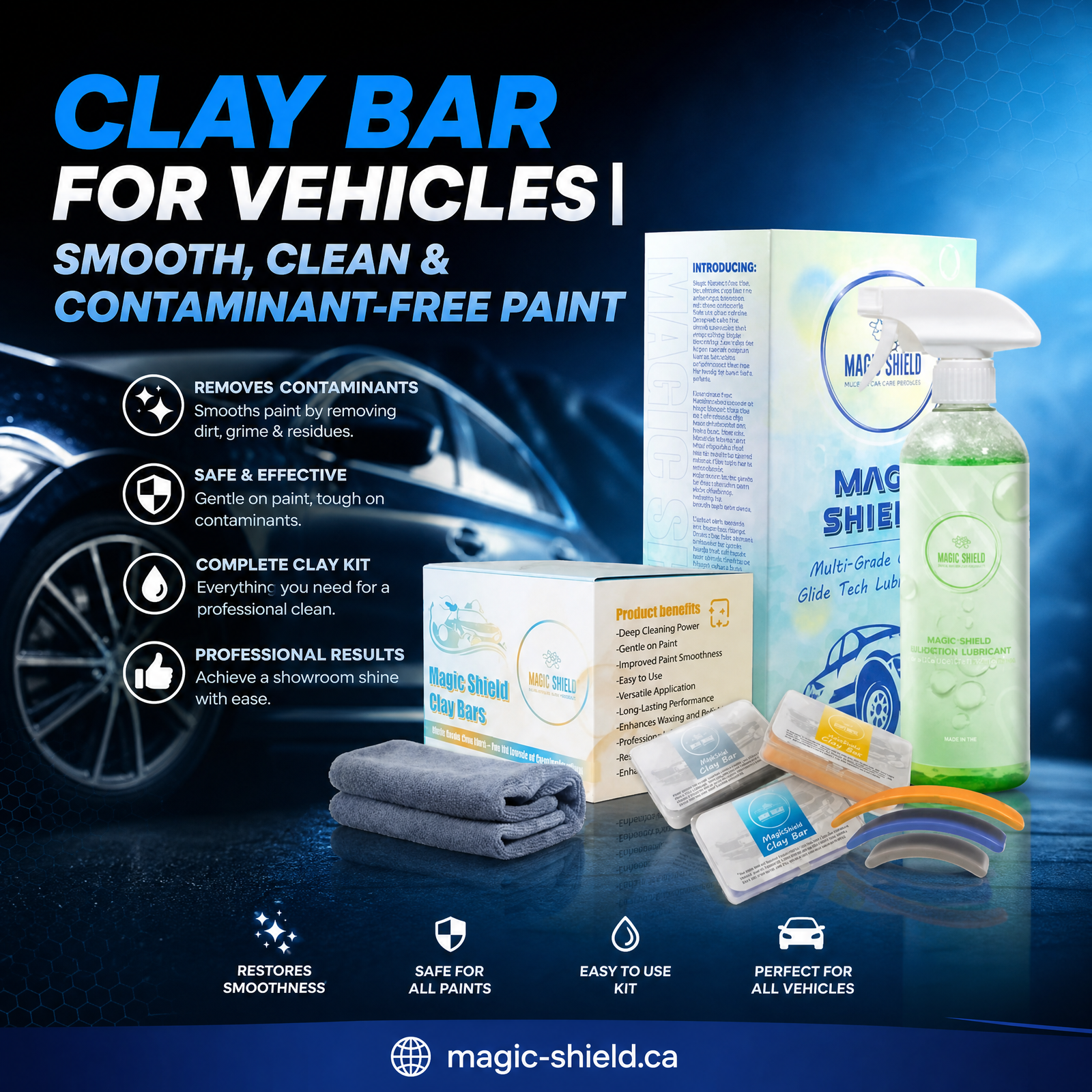
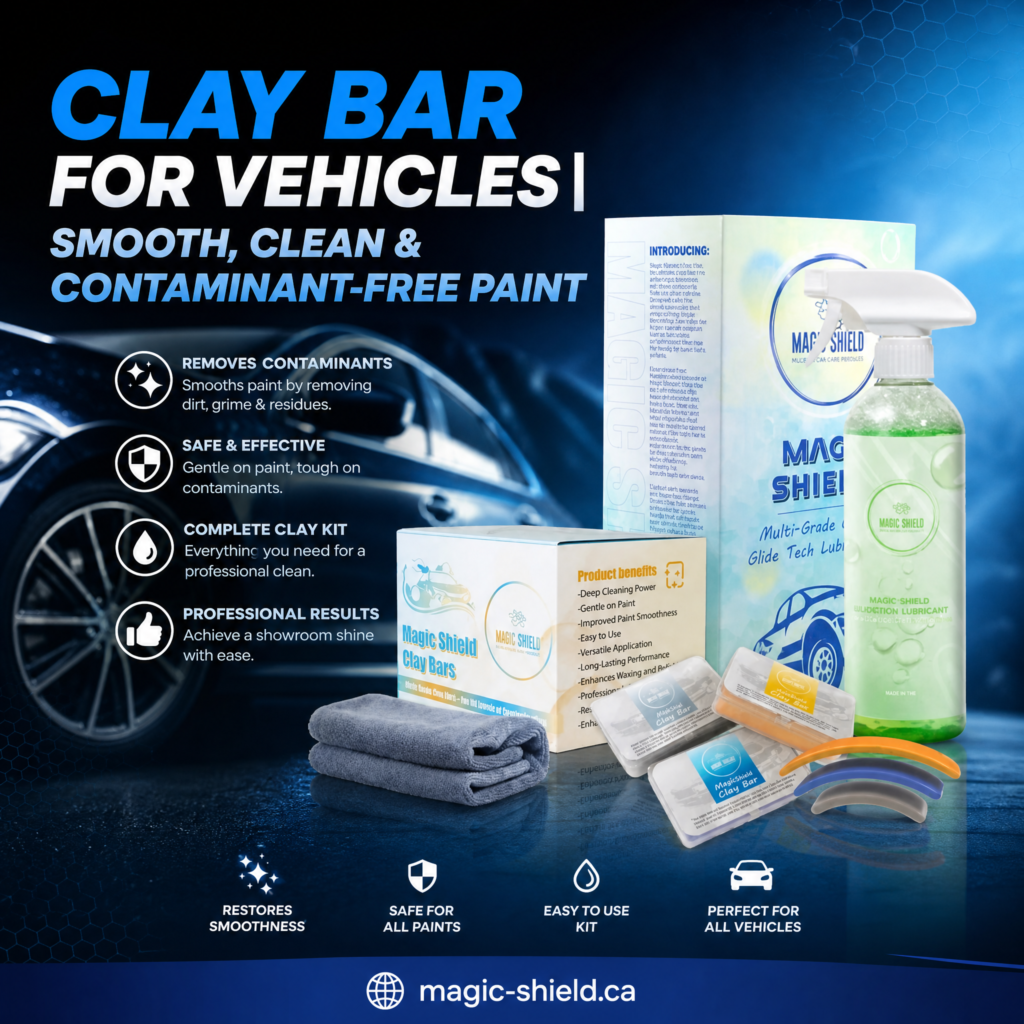
Magic Shield, a Canadian automotive care brand, builds its detailing lineup with these local realities in mind — like road salt exposure and those seasonal temperature swings — so vehicle owners can decontaminate, guard, and keep their paint looking solid, using products made for how we actually drive in Canada.
Common mistakes to avoid
- Claying a dirty vehicle, always wash first
- Skipping lubrication, dry claying is one of the quickest ways to cause marring
- Using a clay bar that s been dropped — it snags grit and that can scratch your paint
- Pressing too hard — let the clay’s tack do the work, not your arm strength
- Working in direct sun or on hot paint — the lubricant kind of evaporates fast, so friction goes up
FAQs:
What does a clay bar do for a vehicle?
A clay bar sort of “pulls off” bonded junk from your car’s surface, like industrial fallout , rail dust, tree sap, and that gritty road film, stuff that a normal wash cant really budge. When the contaminants are gone, the paint feels really smooth again, and it’s better prepped for polish, wax, sealant, or even a ceramic coating.
How often should I clay bar my car?
Most people get the best results with clay bar sessions like two to four times per year. Or just do it whenever the paint feels a little rough, even after a fresh wash, you know that draggy texture you notice with your fingertips.
Is claying safe for every vehicle ?
Pretty much yes , as long as it’s done correctly with enough lubrication, and you don’t try it on a dry or dirty panel. Used that way, it’s generally safe for clear coat, glass, and chrome on most modern cars.
Do I have to clay before waxing or ceramic coating?
Yeah, you really do. Waxes, sealants, and ceramic coatings need solid, clean contact with the paint to actually bond. Claying removes the contamination layer, otherwise that bond is weakened or blocked.
Can I clay a new car, like right after I get it?
Sure. Even new paint can still catch contaminants during transport, or sitting in storage. Rail dust and fallout are common enough that people often clay before their first wax or coating, just to start clean.
What’s the difference between clay bar and clay mitt?
They both do the same decontamination task, but the tool is different. A clay bar is that moldable block you shape by hand. A clay mitt is like a glove with a textured decontaminating surface built in. Usually mitts move quicker across big areas, while bars give you more precision in smaller, tighter spots.
Also Read:
Nano Ceramic Coating Near Me: The Complete Canadian Buyer’s Guide
Black Diamond Coatings | Premium Ceramic Protection | Magic Shield